World History · English
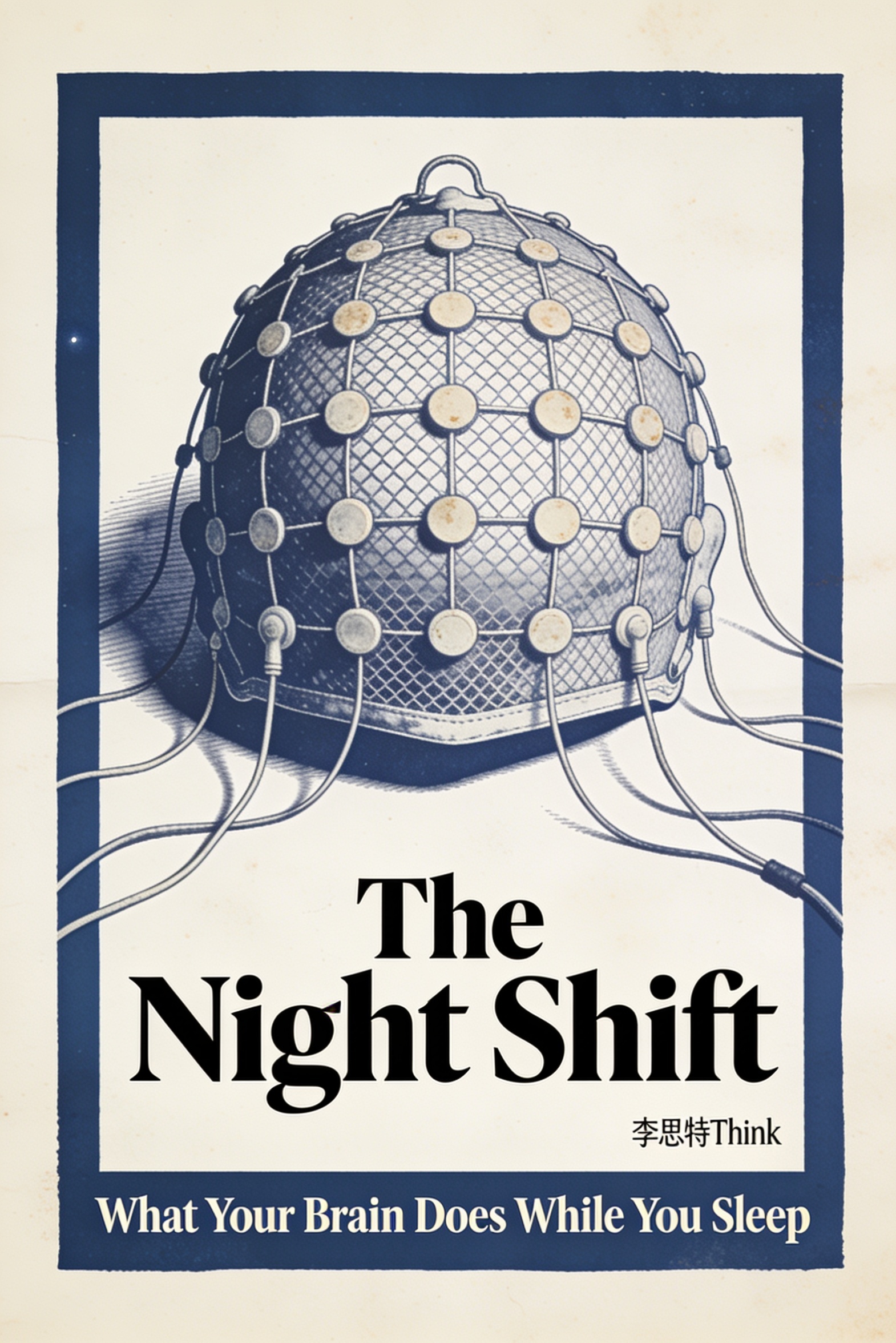
The Night Shift: What Your Brain Does While You Sleep
What Your Brain Does While You Sleep
About this book
Sleep is not an absence of activity but a second job. When consciousness fades, the brain begins its night shift: copying the day’s rough notes into long-term storage, clearing metabolic waste, and running emotional simulations with the logic checker off. This narrative history traces a century of discovery, from early twentieth-century watchmen to modern sleep labs where split-brain patients and sleep-deprived doctors revealed the architecture of rest. Rather than treating dreams as mysteries to be solved or apologized for, the text presents them as essential prediction tuning. Vivid scenes replace equations, showing how researchers learned to read the sleeping mind as a dynamic workshop of memory consolidation and emotional triage. Open questions about why we dream remain allures rather than gaps in understanding. Accessible to readers without biological training, this account reframes slumber not as downtime but as the indispensable labor that sustains waking life.
AI editorial review
This book excels at making complex neuroscience feel intuitive, especially in its early chapters. The opening sequence, where an EOG machine becomes an active character, and the masterful analogy chain in the Von Economo chapter, demonstrate a rare narrative craft. The strong chronological spine from the 1920s to 2015 builds a compelling causal argument rather than a mere catalog of facts. However, the final third of the book suffers from a noticeable decline. The prose becomes less precise, and the narrative discipline gives way to generic, speculative futurism—particularly in the 2080s frami