World History · English
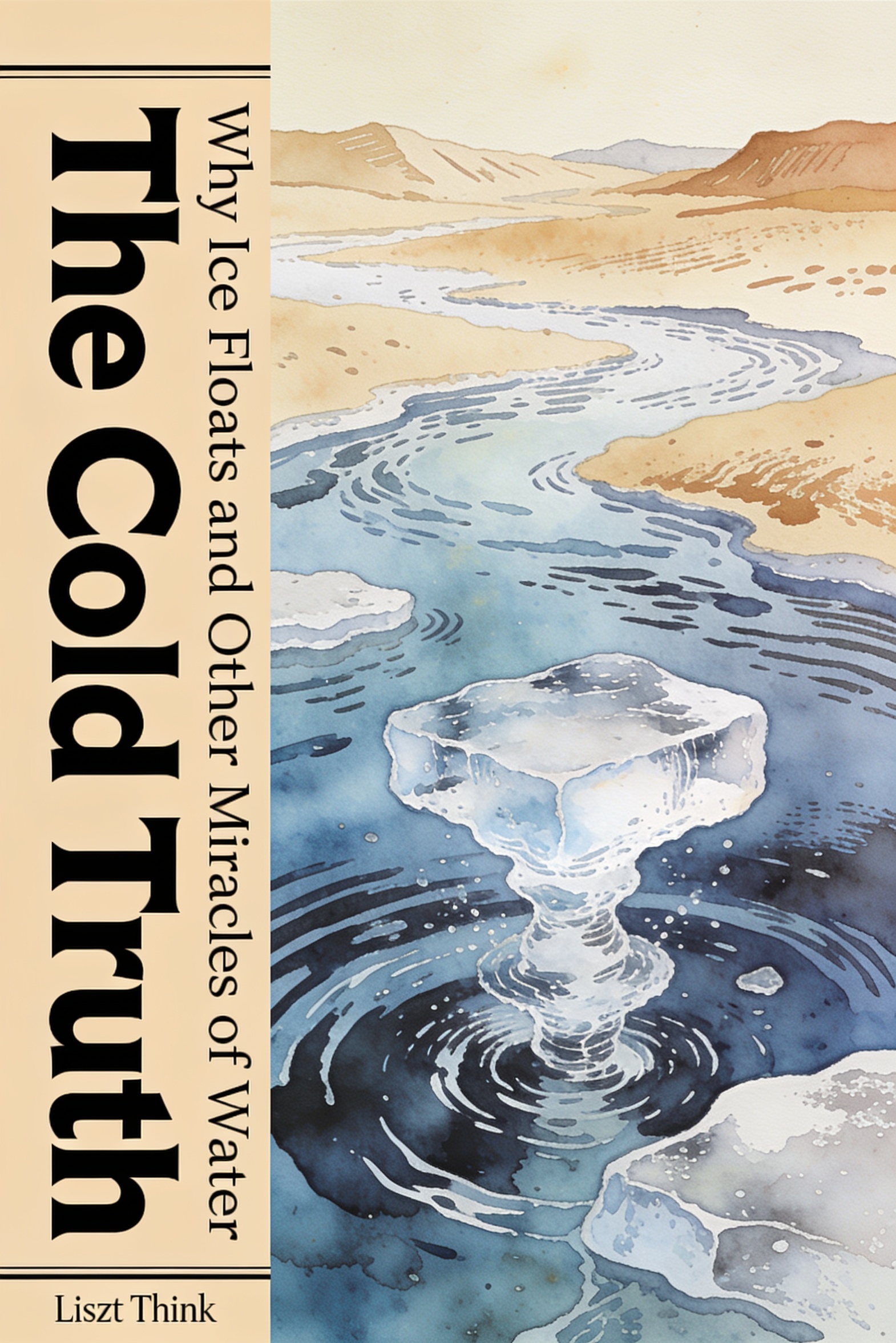
The Cold Truth: Why Ice Floats and Other Miracles of Water
Why Ice Floats and Other Miracles of Water
About this book
Water is the most ordinary substance on Earth, yet it breaks the fundamental rules of chemistry. If ice sank, lakes would freeze solid from the bottom up; without its peculiar cohesion, sap could never climb a redwood. Each anomaly is a doorway into deep physics, where hydrogen bonds act like crowds holding hands and letting go a trillion times a second. This narrative translates complex equations into kitchen experience and laboratory discovery, moving from frost-cracked engine blocks to the Titanic’s brittle steel. It explores supercooling, heavy water, and the elusive second liquid phase without requiring prior scientific knowledge. Beyond established facts lies an alluring frontier: the unknown edges of liquid physics that researchers still struggle to map. From early inquiries to future frontiers, this is a story of how water’s strangeness makes life possible. The most familiar element remains our most profound mystery, inviting readers to see the glass on their table as a window into the universe’s deepest architecture.
AI editorial review
The book's intellectual ambition is genuine, anchored by a productive conceptual frame—the 'Strangeness Engine'—that elegantly ties together water's disparate anomalies. The early chapters are particularly strong, building physical intuition from tactile, historical grounding, such as the vivid, embodied explanation of the 4°C density maximum. However, the narrative engine cools considerably in the middle stretch, where the prose occasionally lapses into a generic textbook register. More troubling is the book's structural fatigue toward the end, where the core strength of concrete analogy is a