World History · English
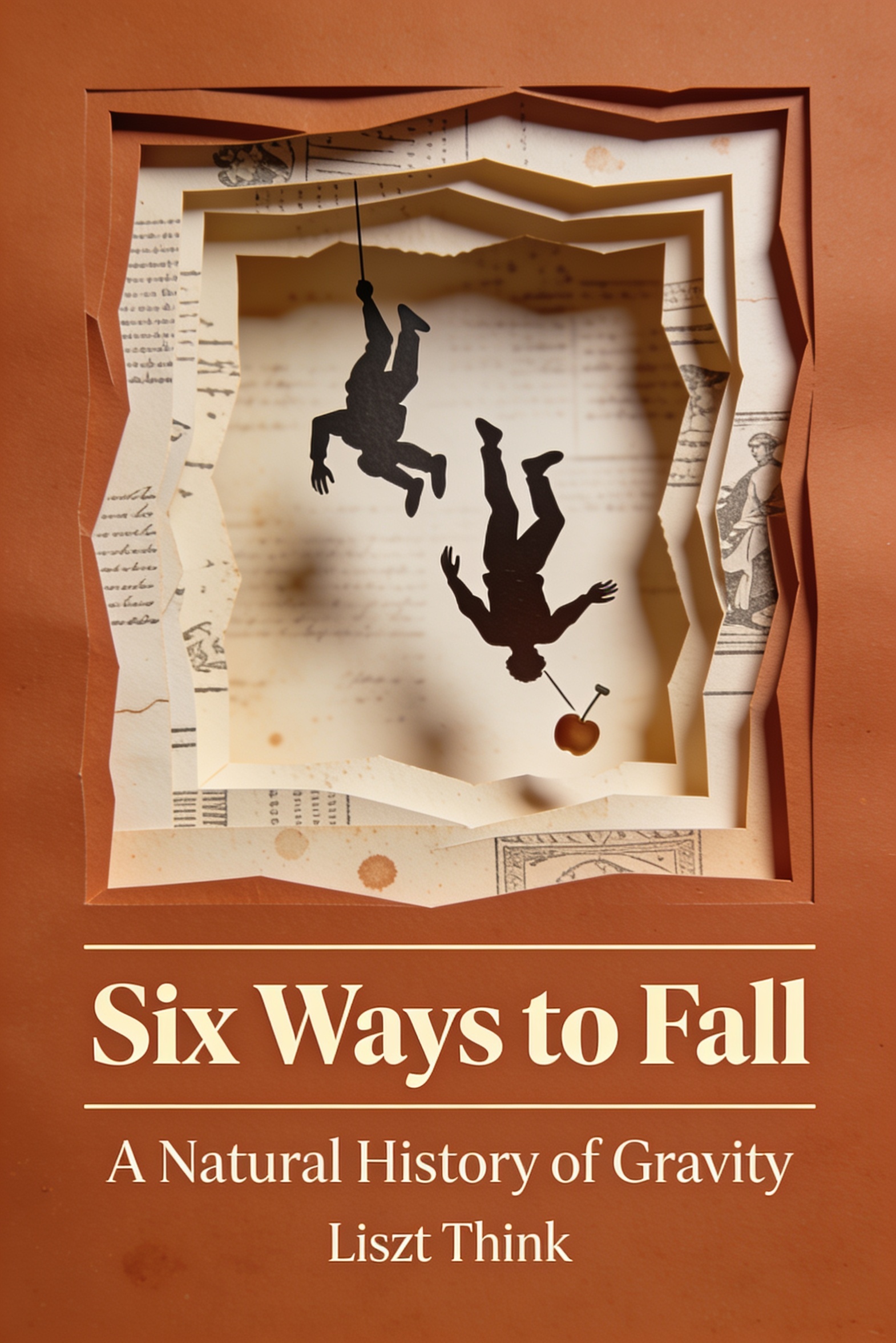
Six Ways to Fall: A Natural History of Gravity
A Natural History of Gravity
About this book
Gravity is the force we know best and understand least. For two millennia, the simple question of why things fall has driven six successive revolutions in physics, from Aristotle’s natural tendencies to the ringing spacetime detected by LIGO. This narrative traces that intellectual journey through lived experience rather than abstraction, translating equations into GPS satellites aging overhead and tides stretching the sea. It moves beyond established canon to confront the unsolved frontiers of dark matter and quantum gravity, treating uncertainty not as failure but as the most vital part of the story. Requiring no prior physics knowledge, this history replaces jargon with tangible analogies, revealing how each era’s answer reshaped our cosmic perspective. It is an invitation to witness science as a persistent human inquiry, where the mystery of a falling apple remains as profound as the curvature of light.
AI editorial review
This ambitious chronicle of gravity’s intellectual history is at its best when it grounds cosmic abstraction in tangible experience. The gripping narrative of the gravitational wave detection, anchored by the evocative 'chirp' of colliding black holes, exemplifies the ideal of an intuitive scientific explanation. Similarly, the account of imaging a black hole’s shadow masterfully builds historical suspense. However, the book's chronological structure leads to a fragmented argument, with 35 chapters often feeling like an accumulation of episodes rather than a cohesive build. While the concludin