World History · English
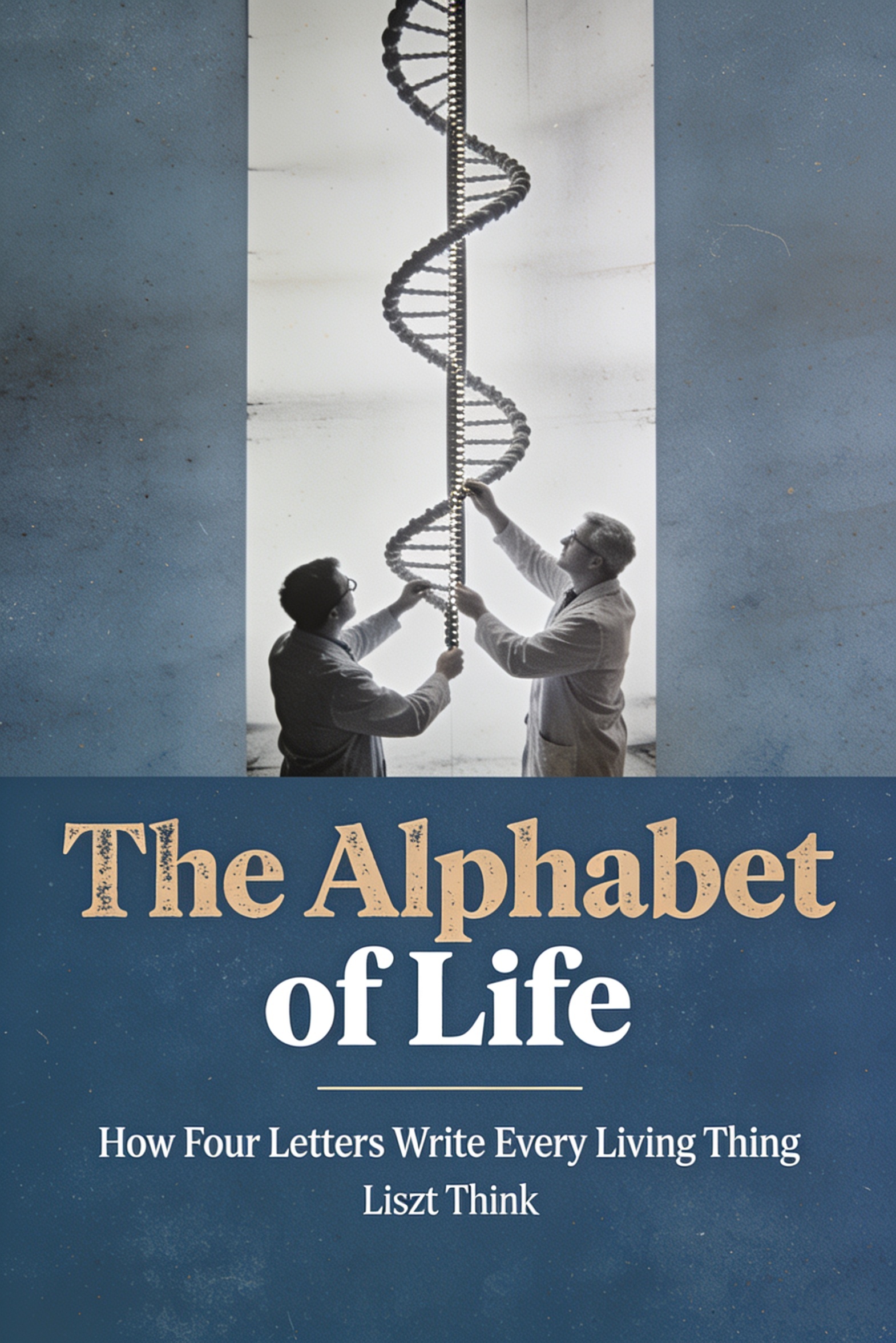
The Alphabet of Life: How Four Letters Write Every Living Thing
How Four Letters Write Every Living Thing
About this book
All life on Earth is written in a four-letter alphabet, yet for most of history, this script remained invisible. From the mold that transformed mice to Rosalind Franklin’s Photo 51 and the high-stakes race to map the human genome, this book narrates the greatest decoding story ever told. Complex biology becomes tangible through vivid scenes: the double helix unzipping like a zipper, genes acting as recipes rather than blueprints, and CRISPR functioning as molecular find-and-replace. Jargon gives way to narrative as experiments unfold in real time, revealing how typos drive evolution and how vast genomic libraries still hold unread shelves. Accessible to readers with no scientific background, this account traces the arc from early heredity mysteries to modern gene editing and epigenetic inheritance. It is a journey through the grammar of existence itself, exploring not only what we have deciphered but the profound questions that remain in the unwritten chapters of our biological code.
AI editorial review
This book excels when it leans into its core strength: translating the abstract machinery of genetics into vivid, intuitive metaphors, as seen in the brilliant opening analogy chain. Its conceptual scaffolding, particularly the mature framing of discovery as establishing a 'grammar' rather than a final answer, offers genuine insight. However, the reading experience becomes uneven, especially in the middle chapters where the narrative momentum falters. Promising thematic threads, like the 'Unfinished Symphony' motif, are introduced but not fully developed, and the prose can lapse into a more ge