Fiction · English
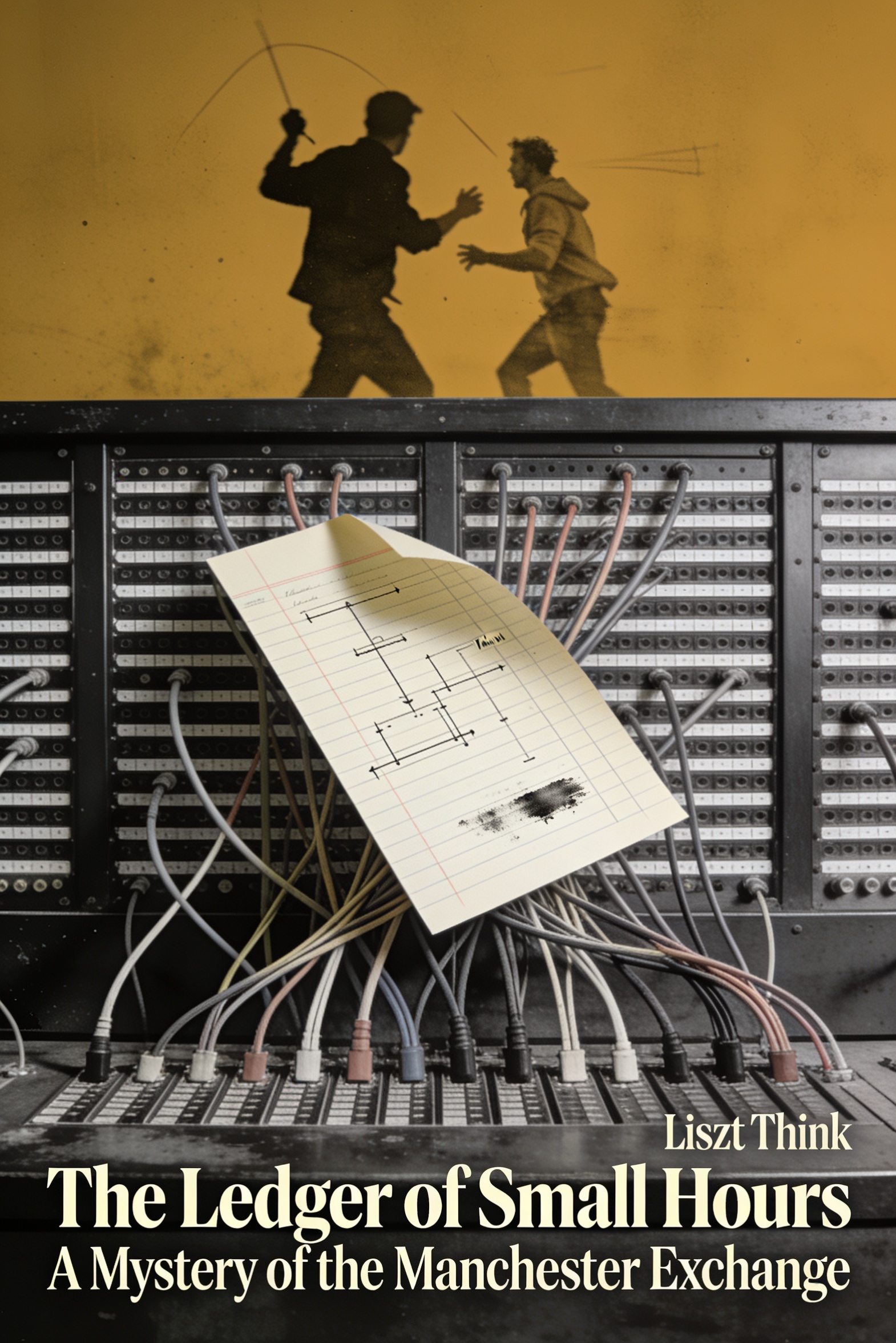
The Ledger of Small Hours
A Mystery of the Manchester Exchange
About this book
February 1962, Manchester. In the fluorescent hush of the night-shift telephone exchange, supervisor Ruth Calloway keeps the ledger—a meticulous record of every trunk call logged by minute and line. When a city councillor is found dead and the police demand the records, Ruth spots the impossible: a page has been rewritten in her own handwriting, but not by her hand. Six operators, an engineer, and the councillor's driver all had reasons to want a call to disappear. Someone has forged the record, and the forgery sits in Ruth's ledger, in her script, under her watch. The clues are all on the page—the fault logs, the bus timetables, the silent gaps between connections. No coincidence solves it; the paper does. A close-third mystery where every entry counts and the smallest hours hold the darkest secrets.
AI editorial review
Tracy O’Neill’s novel shines brightest in the fluorescent hush of the Manchester telephone exchange, where the click of relay racks feels like a secret language. The fair-play mystery is meticulously constructed, and Ruth Calloway’s moral descent offers genuine grit. However, the prose suffers from repetitive tics—the mantra 'The ledger doesn't lie' loses its punch after the seventh recitation—and the middle chapters stall with rhythmic monotony. While the sensory precision of Chapter 9’s theft sequence is immersive, the manuscript too often tells us the tension rather than showing it. A rigor