Chapter 5
Icebergs and Unheeded Warnings
Phillips sat at the wireless desk with the headphones pressing a groove into the side of his head. The morning of 14 April had brought a stack of passenger messages to be sent—bookings, dinner invitations, business matters—and the steady crackle of other ships on the air. Around nine o’clock, a signal came through from the RMS Caronia. Phillips wrote it down as it arrived, the dots and dashes forming words he had seen before this voyage and would see again. Westbound steamers reported bergs, growlers and field ice in latitude 42°N from 49° to 51°W. He logged the time as 9:12 a.m.
The message went to the bridge. Captain Smith saw it, initialed it, and passed it along. Second Officer Charles Lightoller was on watch. The Caronia’s warning was information, not an emergency. Lightoller noted the position, thought nothing more of it, and the ship held its course at approximately 22 knots. The operational mindset entering the ice field was one of routine vigilance, not alarm.
The North Atlantic in April was always hazardous. Mariners knew this. The great lanes of commerce between Europe and America ran directly through the regions where the Labrador Current carried icebergs south from Greenland. In most years, the bergs drifted into the shipping lanes and drifted out again, spotted and avoided. But 1912 was not most years. The ice conditions in the North Atlantic were the worst of any April in the previous fifty years. More bergs had calved from the glaciers of Greenland and more had survived the long drift south, a result of a mild winter that caused large numbers of icebergs to shift off the west coast of Greenland. They sat in the water like white mountains, their bulk hidden beneath the surface, their positions reported by passing ships and then sometimes forgotten.
Aboard Titanic, the system for handling these reports was informal. The Marconi wireless room, located on the boat deck near the officers’ quarters, served as the point of reception. Operators John George “Jack” Phillips and Harold Bride worked in shifts, relaying passenger messages—the revenue source—and handling navigational traffic as it came. There was no requirement that ice warnings receive priority treatment. There was no protocol requiring the operators to deliver such messages directly to the bridge. There was no rule mandating that the bridge log every warning or plot every position on a chart. The system assumed that information would flow, that officers would read, and that captains would decide.
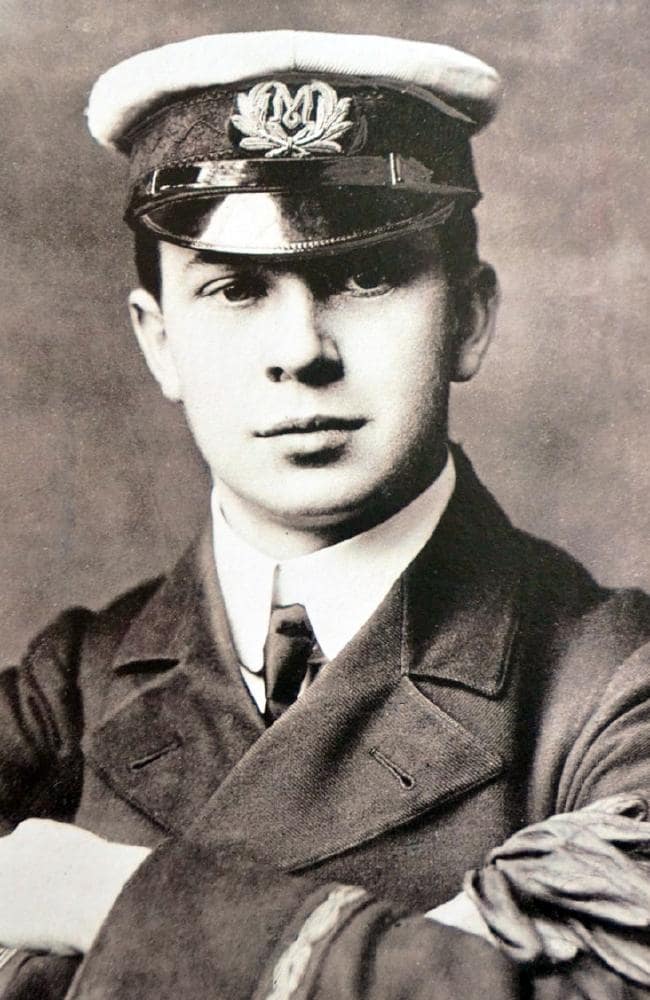
At 10:28 a.m., another signal arrived. The Caronia forwarded a report from the SS Noordam. Much ice was reported in about latitude 42°N, longitude 49°W to 50°W. Phillips logged it. The message made its way to the bridge, where it joined the earlier Caronia report in the chart room. Officers glanced at it. The positions were noted. The ship held its course.
The morning passed. Passengers walked the decks, played shuffleboard, read in the library, and dressed for lunch. The sea was calm. A light breeze stirred the air. The sky stayed clear. The temperature was dropping—a sign that ice might be near—but such drops were common in the North Atlantic and did not themselves signal alarm. The ship proceeded westward on the southern track, the lane recommended by the steamship lines for westbound traffic at this time of year. Captain Smith had sailed these waters for decades. He knew the ice came down in April. He knew to keep a lookout. He also knew that speed mattered. White Star Line vessels ran on schedule. Their reputation depended on it. Olympic, Titanic’s sister ship, had crossed the Atlantic on time, every time, and Titanic would do the same.
Around 11:40 a.m., Phillips received another message. This one came from the White Star liner Baltic, outbound from New York. The Greek steamer Athenai reported passing icebergs and a large quantity of field ice in latitude 41°51’N, longitude 49°52’W. The position placed the ice slightly south and east of Titanic’s current track. Phillips logged the message and sent it to the bridge.
Captain Smith was not on the bridge at that moment. The message was handed to him later, perhaps during lunch. He read it. The Baltic’s report joined the others in the growing collection of warnings. The information was physically present aboard the ship. It had been received, written down, and passed along. But it had not yet been acted upon.
The afternoon brought clear skies and a smooth sea. The temperature continued to fall. By early afternoon, it was noticeable enough that passengers commented on the cold. Some put on heavier coats. Others went below. The ship’s officers noted the drop. It suggested ice ahead. But the ship held its speed.
At some point in the afternoon, Captain Smith showed the Baltic’s message to Bruce Ismay, the chairman of the White Star Line. Ismay was traveling as a passenger on Titanic’s maiden voyage. He had a personal stake in the ship’s performance. The two men spoke on the promenade deck. Ismay later testified that Smith handed him the message without comment. Ismay read it, put it in his pocket, and later showed it to other passengers. The message circulated as a curiosity, a topic of conversation, not as a warning that demanded response. Ismay did not order a reduction in speed. Smith did not offer one. The Baltic’s telegram returned to the chart room, filed with the others.
The system had no mechanism for escalation. Each warning arrived as a discrete piece of information, processed through the same routine. There was no point at which the accumulation of reports triggered a reassessment. There was no officer whose job it was to say: we have received four warnings, the ice field is ahead, we must slow down or alter course. The bridge officers knew of the warnings in a general sense. They had seen the slips. But the slips were not plotted on a chart in a way that would show the growing density of reports. They were not synthesized into a picture. They remained isolated signals, received and filed.
At 1:42 p.m., another message arrived. This one came from the German steamer Amerika, relayed through Titanic to the White Star Line’s New York office. The Amerika had passed two large icebergs in latitude 41°27’N, longitude 50°8’W. Phillips took the message down. A navigational warning was embedded in a relay. The message went to the bridge. It joined the others.
The Amerika’s position placed ice directly ahead. Titanic was steaming west at roughly 22 knots. The latitude and longitude given by the Amerika were close to the track the ship would cross in the coming hours. But the message was not treated as an emergency. It was one more report. The ship held its course.
The fragmentation of information was structural. The wireless operators were not part of the navigation team. They were communications staff, employed by the Marconi International Marine Communication Company, not by the White Star Line directly. Their primary duty was passenger traffic—the messages that generated revenue. Navigational messages were secondary, handled as a courtesy, passed along as time permitted. The bridge officers were not required to acknowledge receipt of every warning. There was no log on the bridge specifically for ice reports. The warnings were written on slips of paper, initialed by whoever received them, and placed in the chart room. If an officer saw them, he saw them. If he did not, he did not. There was no system to ensure that every officer on every watch was briefed on the latest intelligence.
The afternoon wore on. The temperature dropped further. By late afternoon, it was near freezing. The lookouts in the crow’s nest, high above the deck, felt the cold more than anyone. They wore extra layers. They knew ice might be ahead. But they had not been given specific positions. They scanned the horizon with binoculars that were not available—some confusion had left the crow’s nest without them—and with their eyes. They looked for dark shapes against the dark water, for white shapes against the white horizon. The sun was setting. The light was fading.
At 5:30 p.m., the SS Californian, a small British freighter carrying cotton from London to New Orleans, sent a message. Her wireless operator, Cyril Furmstone Evans, transmitted to the Antillian that three large icebergs were five miles to the south at latitude 42°3’N, longitude 49°9’W. Titanic’s wireless operator, Harold Bride, received the message and delivered it to the bridge. The position placed the ice directly in Titanic’s path.
The Californian was herself stopped in ice. Her master, Captain Stanley Lord, had brought his ship to a halt for the night rather than risk steaming through the ice field in darkness. The sea was calm, the ice hard to see. Lord had decided to wait for daylight. His wireless operator was sending warnings to other ships in the area. The message Bride received was one of those warnings.
The bridge officers on Titanic saw the message. But the ship held its course.
Evening came. The sun set around 7:00 p.m. The sky cleared. The stars came out. The sea was a flat calm, a condition that made icebergs harder to see—no waves breaking against the ice, no white foam to catch the light. The temperature was now below freezing. The cold was sharp. Passengers who had been on deck began to go below for dinner.
At 7:15 p.m., Phillips received another message from the Californian. Evans transmitted that his ship was stopped and surrounded by ice. The position was approximately 42°5’N, 50°7’W. The Californian was stopped. The ice was all around her.
Phillips was busy. The passenger traffic was heavy. There were messages to send, messages to receive. The Marconi system was a commercial service, and the operators were under pressure to clear the backlog. Evans’s message was a casual communication between operators, not a navigational warning in the formal sense. Phillips, annoyed at the interruption, cut Evans off. He tapped back that he was busy and to keep out. Evans did not persist. He turned off his set and went to sleep.
The message was not delivered to the bridge.
The failure was not Phillips’s alone. The system gave him no guidance on what to prioritize. Passenger messages paid the bills. Ice warnings were a courtesy. There was no rule requiring him to wake an officer, to interrupt the bridge, to treat a message from a nearby ship as urgent. The message from the Californian sat in the wireless log, another line of dots and dashes, another piece of information that did not reach the people who might have acted on it.
Captain Smith dined that evening with passengers. He was seen in the restaurant, in good spirits. The ship was performing well. The engines ran smoothly. The weather was clear. The warnings he had seen—the Caronia, the Noordam, the Baltic, the Amerika—were filed. He had not ordered a reduction in speed. He had not altered course to the south. He had not called a conference of his officers to discuss the ice. He had not posted extra lookouts. He had not changed the routine.
At approximately 8:55 p.m., Smith excused himself from dinner and went to the bridge. He spoke with Second Officer Lightoller, who was on watch. The conversation turned to the weather. The sky was clear, the sea calm, the temperature falling. Lightoller later testified that Smith asked about the visibility and the cold. They discussed the possibility of ice. Smith said that if the slightest haze appeared, or if the visibility deteriorated, the ship should be slowed or the course altered. But the visibility was excellent. The night was clear. There was no haze. There was no fog. There was only the dark water, the dark sky, and the ice somewhere ahead.
Smith went below to his cabin at approximately 9:20 p.m. He left orders that he should be informed if the situation changed. Lightoller remained on watch until 10:00 p.m. He was relieved by First Officer William Murdoch. The change of watch was routine. Lightoller mentioned the ice warnings to Murdoch. The information was passed along. But no new orders were given. The ship held its course and speed.
At 9:40 p.m., a final warning arrived. This one came from the SS Mesaba, a British freighter. The message was detailed. Ice was reported in latitude 42°N to 41°25’N, longitude 49°W to 50°30’W, with much heavy pack ice and a great number of large icebergs, also field ice. The position given by the Mesaba was extensive—a rectangle of ice that covered the track Titanic was steaming toward.
Phillips received the message. He was still busy with passenger traffic. The Mesaba’s warning was not delivered to the bridge. It remained in the wireless room, logged but unseen by the officers who might have acted on it.
The Mesaba’s message was the most comprehensive warning of the day. It described a field of ice that stretched across the shipping lane. It gave specific coordinates. It used the word “heavy.” It should have been treated as urgent. But the system had no category for urgency. The message was one more slip of paper. The wireless operators were not trained to assess navigational threats. The bridge officers were not trained to demand every scrap of intelligence from the Marconi room. The gap between the wireless desk and the chart room was a few hundred feet. But it might as well have been miles.
The night deepened. The temperature continued to fall. The sea remained calm. The stars were bright. The ship steamed westward at approximately 22 knots. In the crow’s nest, lookouts Frederick Fleet and Reginald Lee scanned the horizon. They had been told to watch for ice. They had not been given specific positions. They did not have binoculars. They stood in the cold, their eyes on the water, waiting for something to appear.
The warnings were aboard the ship. The Caronia, the Noordam, the Baltic, the Amerika, the Californian, the Mesaba—six ships had reported ice. The positions were known. The threat was documented. But the warnings were scattered across different times, different formats, different hands. They had not been assembled into a single picture. They had not been plotted on a chart. They had not been discussed in a meeting. They had not triggered a change in orders.
The concept of Isolated Audibility explains what happened. Each warning was transmitted clearly. Each was received by a listener—the wireless operator, the bridge officer, the captain. But the listeners were not prepared to hear the message as a whole. They heard the individual signals. They did not assemble them into a pattern. They did not treat the accumulation as something that demanded action. The signals were audible. They were not actionable.
The concept of the Confidence Cascade explains why. The ship was new. The technology was advanced. The captain was experienced. The line was prestigious. The speed was routine. The warnings were routine. Ice in the North Atlantic was routine. The confidence that the ship could handle any obstacle, that the lookouts would see any danger, that the officers would react in time—this confidence muted the urgency of the warnings. Each warning was absorbed into the background of normal operations. Each was filed and forgotten.
At 10:00 p.m., First Officer Murdoch took the watch. Lightoller went below. The ship’s routine continued. The passengers were at dinner, at cards, at music, at rest. The engines turned over. The propellers churned the water. The wake stretched out behind the ship, a white line in the dark.
At 10:30 p.m., the Mesaba’s message was still in the wireless room. The Californian’s message had been cut off. The Baltic’s message had been shown to passengers. The Caronia’s message had been initialed and filed. The Noordam’s message was in the chart room. The Amerika’s message had been relayed and logged. The information was there. The threat was known. But the ship held its course.
The lookouts in the crow’s nest stood their watch. They had been at their posts since 10:00 p.m. The night was clear. The sea was calm. There was no moon. The stars provided the only light. The horizon was a dark line against a dark sky. The water was black. The ice, if it was there, would be black too, or white, or gray, depending on the angle, depending on the light. The lookouts scanned. They saw nothing.
At 11:00 p.m., the watch changed again. The ship was now approximately 400 miles from its destination. The night was more than half over. The ice field was ahead. The warnings had been received. The course was unchanged. The speed was unchanged.
In the wireless room, Phillips worked. The passenger traffic had slowed. He was catching up on the backlog. The Mesaba’s message was somewhere in the stack, logged but undelivered. The Californian’s operator had gone to sleep. The airwaves were quiet.
On the bridge, Murdoch stood watch. He had been told about the ice. He had seen some of the warnings. He knew the temperature was falling. He knew the sea was calm. He knew visibility was good. He had not been given specific positions. He had not been ordered to slow down. He had not been ordered to alter course. He stood at his post, watching the horizon, waiting for the lookouts to call down if they saw anything.
The ship proceeded at full speed into a known ice region with warnings filed but unintegrated, handing off a drastically shortened reaction window to the lookouts on watch.