Chapter 14
The Lot Falls Upon the Cabin Boy
The men were now a ledger with only one remaining, unspoken entry, and the pencil stub, when he touched it to paper, made marks that neither he nor anyone else would ever read.
—-
In the account Owen Chase published the year after his rescue, the drawing of lots occupies five sentences. The prose moves with the flat rhythm of a customs declaration: the proposal, the method, the outcome, the disposal of the remains. No faces intrude. No voices break the surface. The cabin boy who drew the fatal lot appears only as “Owen Coffin,” a name without age or connection, followed by the passive construction that he “was instantly dispatched.” Chase does not say who dispatched him, or how, or what sound the sea made when it received what remained.
Thomas Nickerson, writing fifty years later in a boarding house on Nantucket, required more than five sentences. His hand moved across forty-seven pages of unsteady script, returning again and again to what he had not witnessed but could not escape. Where Chase gave procedure, Nickerson gave weight: the atmosphere of extremity that preceded any decision, the specific bodies already consumed, the number 127 that appears beside them without explanation—days perhaps, or miles, or some private calculation of debt. Most tellingly, Nickerson named the method of death that Chase had swallowed into his passive voice: the boy was shot, not dispatched, the firearm raised and sighted across empty water, the report carrying no echo because there was nothing to echo against.
The two accounts do not disagree about what happened. They disagree about what it meant to make it happen. Chase, writing for a community that already knew the outlines and needed to see them managed, presented the lot as a formal necessity—the final instrument of a rational system still functioning even as its objects dissolved. Nickerson, writing for no one, presented it as a haunting that had outlived every other memory of the voyage. The difference matters because it reveals the act not as a single spasm of desperate violence but as the culmination of a way of thinking that had governed these men from their first day at sea.
—-
To understand why lots, one must follow the logic backward through the accumulated decisions that made them conceivable.
The Nantucket whale fishery operated through distributed risk. A single voyage spread capital across multiple hulls, multiple hulls across multiple seasons, multiple seasons across the compound uncertainties of weather, market, and whale movement. The owners—Gideon Folger and Paul Macy in the case of the Essex—invested in probability, not certainty. They insured against loss, diversified their holdings, and accepted that some portion of their fleet would fail to return. The men who sailed these vessels inhabited the same statistical worldview. They drew lots for the choicest cuts of whale meat, for watch assignments, for the distribution of oil bonuses. The lot was not foreign to their experience. It was a routine mechanism for allocating scarce goods when consensus failed.
This institutional habit explains the form of the decision on Pollard’s boat. The men did not vote. They did not defer to rank, which would have made Pollard or his mate Charles Ramsdell the automatic choice. They did not select the weakest, which would have targeted the already-dying. They used a method that removed human choice from the selection of the victim while preserving human agency in the execution. The lot transferred responsibility to chance, and chance, in their cosmology, carried a kind of neutrality that direct violence lacked.
Why this method rather than another? The answer lies in the specific character of Nantucket’s maritime culture. Other seafaring communities facing starvation had resorted to different logics. In 1765, the crew of the Peggy, stranded on the coast of Africa, reportedly drew lots but then refused to enforce the outcome, drifting instead into collective death. In 1793, the survivors of the British ship Grampus supposedly selected their victim by age, consuming an elderly sailor first. The Essex men rejected both alternatives—the paralysis of the Peggy, the hierarchical selection of the Grampus—in favor of a procedure that preserved the formal equality of the crew while accepting the necessity of sacrifice.
The lot was the ledger mentality pushed to its terminal point. Where the owners’ accounts balanced oil against time, the survivors’ lots balanced lives against lives. The transformation was gradual, almost imperceptible, until it became absolute. First they had eaten the ship’s stores, measured by the pound. Then the tortoises of Henderson Island, counted by the shell. Then the bodies of those who died naturally, portioned by the joint. Finally, the living, assigned by chance. Each stage followed from the last through the same operational logic: scarce resources must be allocated, allocation requires a rule, the rule must apply equally to all who remain.
—-
The event itself, reconstructed from the two accounts, unfolded with a terrible deliberateness.
By January 12, 1821, Pollard’s boat had been separated from the others for more than two weeks. The three boats had left Henderson Island together on December 26, 1820, carrying seventeen men between them. Chase’s boat, with Nickerson aboard, had separated during a squall on December 27. Joy’s boat, with Obed Hendricks in command, had disappeared from sight sometime after. Pollard’s boat, with six men, continued eastward toward South America on the original calculation that had sent them away from the Marquesas and Tahiti.
The six were: Captain George Pollard, Jr., twenty-eight years old, who had sailed on the Essex as second mate and first mate from 1815 to 1819 before his appointment as captain; his cousin Owen Coffin, the cabin boy; Charles Ramsdell, the second mate; Barzillai Ray, a seaman; and two others whose names appear differently in different records. The uncertainty itself testifies to the administrative collapse that accompanied physical extremity. On a whaleship, every man was entered in the crew list, his wages calculated to the fraction, his share of oil determined by written contract. In the open boat, names became provisional, identities reduced to functional capacity: who could row, who could bail, who could be spared.
A sailor died on January 20, according to Chase’s chronology—one of the two men beyond Coffin, Ray, Ramsdell, and Pollard himself. Nickerson’s account suggests confusion between this death and another, or perhaps an earlier death he could not precisely date. What is certain is that by late January, the survivors had consumed two bodies and faced the prospect of consuming a third. The interval between deaths had shortened. The rate of consumption had accelerated. The mathematics of survival had turned against them.
The proposal to draw lots emerged from this calculation. Chase, reporting what he learned later from Pollard and Ramsdell, presents it as a collective agreement. Nickerson, reconstructing events he did not witness, emphasizes the extremity that preceded any agreement. Both accounts converge on the procedural details: the preparation of the lots, the mixing of them so that no man could know which he drew, the simultaneous or sequential selection, and the outcome.
Owen Coffin drew the fatal lot.
The relationship between Pollard and Coffin adds a dimension that neither account fully explores. They were cousins. Pollard had known Coffin from childhood on Nantucket, had watched him grow into the trade, had presumably recommended him for the voyage. The family connection might have protected Coffin in other circumstances. In the logic of the lot, it offered no protection at all. Indeed, the formal equality of the procedure required that kinship be irrelevant. To spare Coffin would have been to violate the compact that made the act permissible.
What happened next diverges in the telling. Chase writes that Coffin was instantly dispatched. Nickerson records that he was shot by his companions. The method matters. A gunshot required preparation: a loaded firearm still functional after weeks at sea, a deliberate aim across the boat’s narrow width, a recognition that the victim would not submit voluntarily to blade or bludgeon. The instant of Chase’s account stretches in Nickerson’s to encompass the full horror of execution—the raising of the weapon, the moment of sighting, the report across water that swallowed sound.
Then the consumption. Chase: nothing of him left. Nickerson: the body was divided among the survivors. The passive construction in both accounts is significant. No one claimed to have eaten; the eating simply occurred, as weather occurs. The grammar of survival had become indistinguishable from the grammar of natural process.
—-
The institutional roots of the act become visible when one compares it to contemporary practices on other whaleships and in other maritime disasters.
Nantucket whaling had developed specific protocols for managing death at sea. When a sailor died, his effects were inventoried, his wages calculated to the date of death, his possessions auctioned to the crew with the proceeds added to the estate. The body, if land was not near, was committed to the sea with a brief service. These procedures served practical purposes—preventing disputes over property, maintaining morale, documenting losses for owners and insurers—but they also constituted a ritual acknowledgment that the voyage continued, that the ledger remained open, that death was an accounted-for cost rather than a termination of the enterprise.
The Essex survivors adapted these procedures to circumstances the protocols had not anticipated. The inventory became portioning. The auction became the lot. The sea burial became consumption. Each adaptation preserved the form of the original while inverting its content. The men who drew lots for Owen Coffin were performing a version of the same ritual they had performed for shipmates who died of disease or accident, but with this difference: the victim was chosen before his death, and his death was the purpose rather than the terminus of the procedure.
Why did they accept this inversion? The answer lies in the specific constraints of their situation. They could not bury Coffin at sea without wasting the protein his body represented. They could not abandon him on a raft or island without condemning themselves to the same slow starvation that had already killed two of their number. They could not draw lots for the next victim after Coffin died naturally, because the interval of his natural death might be too long, and because the next man to die might be the one whose survival was most necessary to the boat’s navigation. The lot solved these problems by making death simultaneous with selection, by compressing the interval between decision and execution to the minimum compatible with procedural fairness.
This compression was the final expression of the logic that had governed their voyage. The owners’ accounts had reduced whale oil to gallons and dollars; the ship’s log had reduced the voyage to positions and sightings; the survivors’ lots reduced human life to a stochastic entry, a probability distribution with six equally weighted outcomes. The transformation was complete. The blank page of the Pacific, which had invited their projections of route and rescue, now formed the boundless backdrop to their horrific lottery.
—-
The aftermath on Pollard’s boat can be traced through the diminishing numbers of its crew.
After Coffin’s death, four men remained: Pollard, Ramsdell, Ray, and one other. Barzillai Ray died sometime in early February, cause unspecified in the surviving records. His body too was consumed. Then the other sailor, leaving only Pollard and Ramsdell. The two captains of their own fates, the master and his mate, reduced to a pair of skeletons in a twenty-five-foot boat, drifting eastward with the trades.
The rate of consumption had outpaced the rate of death. By the time a whaleship sighted them on February 23, 1821, Pollard and Ramsdell had been without food for four days, surviving on the last scraps of their former companions. They were found sucking the bones of the dead, a detail that entered the published accounts and fixed the Essex in maritime memory as the catastrophe of catastrophes, the story that demonstrated both the limits of human endurance and the depths to which necessity could drive.
But the necessity itself was manufactured. The men on Pollard’s boat had chosen their course, their method, their victim. The lot was not an improvisation of desperation but the application of a pre-existing logic to unprecedented circumstances. They had been trained to think in terms of shares, of probabilities, of allocated risk. When the risk became absolute, they allocated it with the same instruments they had used for lesser distributions.
Chase’s boat, separated since December 27, had followed a different trajectory. Nickerson’s account describes a slower descent, with the consumption of bodies beginning later and proceeding more reluctantly. Richard Peterson, the black sailor who had joined the Essex at the Cape Verde Islands, died on January 20 and was buried at sea—committed to the deep, in Nickerson’s phrase, with no consumption reported. Another sailor, who died later, was not so fortunate. The difference in treatment suggests that even within the same disaster, the compact of necessity was negotiated differently, that the logic of the lot was not mechanically applied but actively chosen.
The contrast between the two boats illuminates the central claim of this chapter. The drawing of lots was not an inevitable response to starvation. It was a specific solution, generated by a specific institutional culture, applied by men who had been trained to think of their enterprise as a calculable risk distributed across multiple outcomes. When the outcomes narrowed to survival or death, they distributed that too.
—-
The silence in the records compounds the horror.
Owen Coffin left no account. He was seventeen, unmarried, without children to preserve his name in Nantucket’s genealogies. The ship’s articles list him as cabin boy, wage twelve dollars per month, share of oil one hundred and twentieth—precisely calculated, as were all the shares, to reflect his junior status. The precision of the entry, the decimal exactitude of his fractional entitlement, stands in grotesque contrast to the manner of his death. He was worth one part in one hundred and twenty of the voyage’s proceeds. He was worth, in the final accounting, four meals for five men, or five meals for four, or some other distribution that no one recorded because the mathematics of consumption had become too intimate for notation.
Captain Pollard returned to Nantucket in June 1821, four months after his rescue. He was twenty-nine years old. The owners, Folger and Macy, offered him another command—the Two Brothers, a new ship building in Salem. He accepted. The culture that had produced the lot also produced this: the understanding that catastrophe was a statistical inevitability, that the captain who survived it had demonstrated the relevant virtues of endurance and decision, that the voyage must continue because the capital was committed and the oil was needed.
Pollard’s second command ended in shipwreck. The Two Brothers struck a reef in the Hawaiian Islands in 1823, losing all hands but the captain and one boat crew. He returned to Nantucket again, this time to become a night watchman, a man who walked the dark streets of the town where he had once been honored, checking locks, marking time. He died in 1870, aged seventy-eight, having outlived most of his Essex shipmates and all of the owners who had sent him to sea.
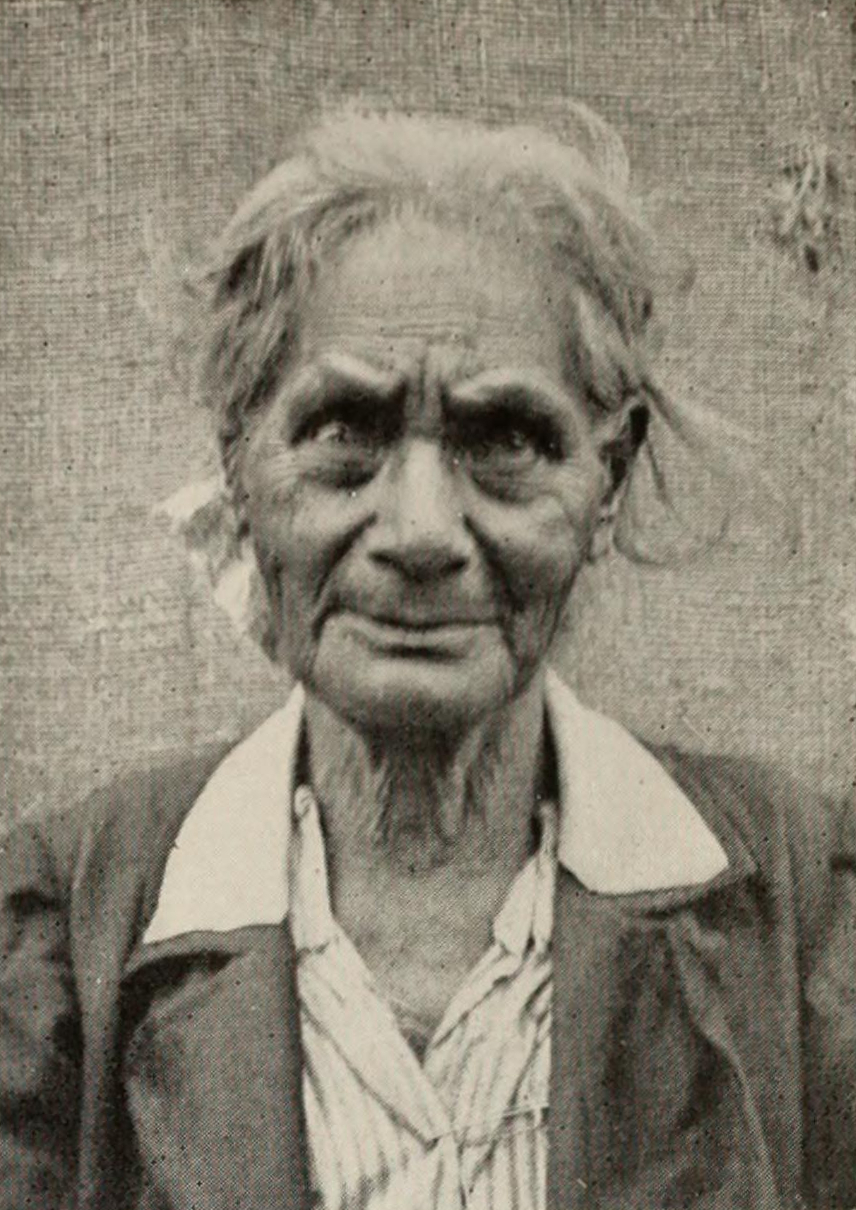
Owen Chase became the most famous of the survivors, not because he drew lots—he was on the other boat—but because he wrote the narrative that defined the event for posterity. His account, with its procedural clarity, its suppression of emotional content, its transformation of horror into manageable form, became the template for subsequent retellings. When Melville read it, he annotated the margins with exclamation points and queries, fascinated by the whale that had attacked the ship, less interested in the men who had eaten their cousin. The Moby-Dick that resulted transformed the Essex into allegory: Ahab’s pursuit, the white whale’s malevolence, the crew’s collective destiny. The drawing of lots disappeared into the general atmosphere of maritime doom, mentioned in passing if at all.
Nickerson’s account, when it finally surfaced, restored the particularity that Chase had suppressed. The faces, the numbers, the wavering handwriting of an old man who had never escaped the memory of what he had witnessed. And on these two bodies 127. The cipher that no one has deciphered, the calculation that may refer to days, to miles, to some private system of accounting that Nickerson could not or would not explain.
—-
The boat sails on, its course unchanged, but its world now defined by the grim, proteinaceous reality in its bottom.