Chapter 11
The Burning Barn
The standoff held until fire broke it. Outside the Garrett tobacco barn, in the gray half-light before sunrise on April 26, 1865, soldiers of the 16th New York Cavalry waited with bundles of dried brush and straw. They had ridden through the night from Port Royal, twenty-six men under Lieutenant Edward P. Doherty, accompanied by two civilian agents of the War Department: Colonel Everton Conger, who had extracted Willie Jett’s confession and led them to this isolated farm, and Lieutenant Colonel Luther Baker, nephew of the detective chief Lafayette Baker.
Inside the barn, John Wilkes Booth and David Herold had listened to the cavalry’s arrival, to the voices of men who knew their names. The door was barred from within. The walls were thick oak and pine, built to cure tobacco, not to withstand siege. Then flame entered the gap between two planks—whether by order, misheard command, or a soldier’s private initiative, the sources would never fully agree—and the nature of the confrontation changed in the time it took cured leaf to catch and pine kindling to crackle.
The Garrett barn was a substantial agricultural structure, constructed by Richard Garrett to protect the annual crop that represented his family’s principal investment. Its pitched roof held heat for the curing process. Its walls, weathered by Virginia seasons, now began to transmit light from within as the fire spread: first orange flickers, then the brighter glow of established flame. The soldiers outside held their positions, carbines trained on the door and any visible gap in the siding. Some would later testify that they heard movement inside, perhaps the sound of Booth’s injured leg dragging across the packed earth floor, perhaps the click of his Spencer carbine being prepared. Others remembered only the roar of the fire and the shouts of their comrades.
Inside, David Herold made his decision quickly. The twenty-two-year-old pharmacist’s assistant had followed Booth through twelve days of flight—through the Surratt tavern, through Dr. Samuel Mudd’s farmhouse in Maryland, across the Potomac to Virginia, through the pine thicket with Thomas Jones, to this barn where the Garretts had given them blankets and shelter under the alias of “James W. Boyd.” Herold had never been the leader of the enterprise. He had carried supplies, tended horses, accepted Booth’s authority without visible question. Now, as smoke filled the upper reaches of the barn and the heat intensified toward the center, he chose to survive.
Herold moved toward the door, calling out his intention to surrender. The soldiers outside ordered him to throw out any weapons and emerge with hands raised. He complied, stepping into the dawn light unarmed, and was immediately seized, bound, and placed under guard. His cooperation would not save him from the gallows, but it removed him from the burning building. The confrontation now involved only Booth and the soldiers outside, the assassin and the fire that was becoming an inferno.
Booth’s position and actions in these final minutes remain disputed. Some accounts placed him near the barn’s rear wall, carbine in hand, apparently preparing to fight his way out or to die in the attempt. Others described him limping on the broken leg he had sustained in his leap from the presidential box at Ford’s Theater—an injury insufficiently treated by Dr. Mudd twelve days before, then aggravated by hard riding and hiding. The smoke thickened. The crackle of burning wood became a sustained roar. The heat drove any occupant toward the walls or the door, toward the soldiers’ weapons or the flames consuming the structure above.
Thomas H. “Boston” Corbett stood with the other soldiers, his position near a crack in the barn’s siding that allowed a view of the interior. Corbett was a milliner by trade, a religious fanatic by reputation. He had enlisted in the Union army after the death of his wife and child, had survived imprisonment at Andersonville, had castrated himself with scissors after visiting prostitutes in an act of spiritual purification he later described as necessary to preserve his soul. He prayed loudly, quoted scripture in ordinary conversation, and had requested permission to hold night meetings at McKendree Chapel during the regiment’s recent encampment. When orders arrived to pursue Booth, he had been among the first to volunteer.
What Corbett did next would be contested for decades. He later claimed that he had seen Booth through the crack in the siding, that the assassin had raised his carbine as if to fire at the soldiers outside, and that he had acted to protect his comrades from imminent danger. He also claimed divine instruction: that God had directed his hand to the precise spot, that the shot was not his own decision but the fulfillment of a higher purpose. The official report would eventually credit this account, presenting Corbett’s action as a necessary response to an active threat.
The physical evidence suggested otherwise. Booth was found with his carbine unfired, indicating that he had not discharged his weapon at the soldiers. The bullet entered his neck from the side, severing three cervical vertebrae and partially cutting his spinal cord, producing immediate paralysis from the neck down. He collapsed without firing, without speaking coherently, his body falling near the barn’s interior wall as flames spread above and around him. The location of the wound—lateral, at close range through a narrow gap—implied a deliberate shot at a stationary or slowly moving target, not a snap response to an imminent threat.
Soldiers rushed into the burning structure to drag Booth clear. The heat was now intense enough to threaten anyone entering, and several men received minor burns in the extraction. They carried the paralyzed assassin to the porch of the Garrett farmhouse, laying him on boards or blankets as the barn behind them became fully engulfed. Richard Garrett, who had extended hospitality to these men without knowing their identities, watched his tobacco crop and his outbuilding destroyed in the same hour. The financial loss was catastrophic for a farmer in a defeated region. The moral complication—of shelter offered to strangers, of protection given to the most wanted criminals in America—would burden his family for generations.
Booth lived for approximately three hours on that porch. The bullet had not killed him immediately, but the paralysis and the wound’s location made survival impossible. He was twenty-six years old. Contemporary accounts of his final minutes differ fundamentally. Some described him asking to see his hands, which were held before his face; unable to move them himself, he looked at them as if confirming his own existence. He reportedly asked that his mother be told of his death. Other witnesses remembered no coherent speech, only the movements of a dying man whose nervous system had been severed. The variations in these accounts would never be fully reconciled; each participant remembered what supported their own position in the events that followed.
The immediate practical demands on the soldiers and agents were specific and pressing. The body must be identified with certainty. The prisoner Herold must be secured for transport. The news must reach Washington with sufficient speed to satisfy Edwin Stanton, who had directed this manhunt with obsessive attention for twelve days. And the circumstances of the shooting must be shaped into an account that would withstand official scrutiny, that would present the death of Lincoln’s assassin as lawful and necessary rather than as the possible result of unauthorized violence by a religiously unstable enlisted man.
Conger and Baker moved first on identification. They had Willie Jett, the young Confederate courier whose interrogation had led them to the farm, confirm that this was indeed Booth. The facial burns sustained in the burning barn and the general disfigurement of dying made this identification less certain than they would later claim. They searched the body, finding a small diary that Booth had kept during his flight, a modest amount of cash, and various personal effects. The diary would become crucial evidence in the conspiracy trials that followed, though portions of it would be suppressed or destroyed by War Department officials who found its contents inconvenient to their narrative of the assassination plot.
The official telegram went out within hours, composed to emphasize success and minimize irregularity. Lafayette Baker, the detective chief, crafted a message that presented the fire as tactical necessity and the shooting as response to armed resistance. Booth’s death was described as the virtually inevitable outcome of his own refusal to surrender, not as the result of a possibly rogue act by a soldier who had already demonstrated psychological instability. The telegram crossed the distance to Washington in the time the technology allowed, carrying news that would relieve and satisfy the War Department’s twelve-day preoccupation.
The sanitizing process began immediately and would continue for months. Corbett was initially arrested for disobeying orders to take Booth alive—these orders existed in some form, though their precise wording and transmission remained disputed—then released without explanation and eventually rewarded. The contradiction between punishment and reward for the same act was never fully resolved in official documents. It simply dissolved into the larger narrative of national relief: the assassin was dead, justice was served, the final trauma of the war could begin to heal.
But materials for a different story survived. The testimony of participants, recorded in the immediate aftermath and again at the conspiracy trial, contained variations that official reports smoothed away. The medical examination of Booth’s body, conducted before hasty burial and secret disposal, documented a wound location inconsistent with Corbett’s account of an active threat. The physical remains of the barn, burned to its foundations or deliberately pulled down afterward—accounts differed on whether it collapsed naturally or was destroyed to prevent its becoming a shrine—testified to the intensity of the fire that had preceded the shot.
The manhunt that had begun at Ford’s Theater on April 14 ended here, on a farmhouse porch in Virginia, with a dying man whose last words were variously reported and whose body would be transported to Washington for identification, burial, and concealment. The institutions that had pursued Booth—the War Department, the detective force, the military cavalry—had proven capable of finding a single fugitive across hundreds of miles of hostile or indifferent territory. They had also proven capable of improvising violence when convenient, of constructing official narratives to cover that violence, and of rewarding the individuals who carried it out while suppressing the documentary record of their actions.
David Herold, the surrendered accomplice, watched these proceedings from under guard. His cooperation had removed him from the burning barn but not from legal consequence. Within three months, he would stand trial before a military commission alongside other alleged conspirators, including Mary Surratt, whose boarding house had sheltered the plotters, and Dr. Samuel Mudd, whose medical treatment of Booth would be interpreted as evidence of knowing participation in the assassination. Herold would be convicted and hanged on July 7, 1865, protesting to the end that he had never intended harm to the President, that he had merely followed where Booth led.
The fire’s application had been discussed among the officers in the minutes before dawn, though whether it was formally ordered remained unclear in subsequent testimony. Colonel Conger, the senior officer present, would later claim that he had authorized only the threat of fire, not its actual use. Lieutenant Doherty, commanding the cavalry detachment, would assert that he had given no such command. The soldiers themselves, when questioned, offered contradictory recollections: some remembered a shouted order, others remembered only the sudden appearance of flame, and at least one suggested that a private named “Boston” Corbett had been among those pressing for more aggressive measures.
The confusion was perhaps inevitable given the circumstances—twenty-six men exhausted from a night ride, operating in unfamiliar terrain, confronting the most notorious fugitive in American history—but it also served the interests of those who would later need to disavow responsibility for what the fire made possible.
The type of fuel mattered to how quickly the situation deteriorated. The soldiers had gathered dried tobacco leaves, corn stalks, and pine kindling from the Garrett farm’s outbuildings, materials chosen for their combustibility rather than their controlled burn. Tobacco barns were designed to hold heat and smoke for curing; they were not designed to resist it. The pitch in the pine boards, accumulated over years of Virginia summers, caught almost immediately. Within two minutes of the first flame entering the gap, the interior temperature had risen sufficiently to make breathing difficult in the upper portion of the structure. Within five minutes, the roof began to smolder. The soldiers outside could feel the heat intensifying through the oak siding; those inside, if they attempted to approach the walls for cooler air, found themselves silhouetted against the growing light of the flames.
Herold’s surrender, when it came, followed a predictable pattern of panic that soldiers recognized from other engagements. He had begun the standoff positioned near Booth, perhaps hoping that the assassin’s reputation for determination would somehow protect them both. As the smoke descended and the heat became unbearable, he separated from his companion, moving toward the door in a crouched position that suggested he expected to be shot at any moment.
His voice, when he called out, carried the particular pitch of young men in extremis—high, rapid, promising anything for survival. The soldiers outside, veterans of four years of war, had heard that tone before in prisoners taken at Cold Harbor and the Wilderness. They knew to demand visible hands, to order the prisoner to turn slowly, to bind him before he could reconsider. Herold offered no resistance, perhaps recognizing that his value as a witness outweighed any threat he posed.
Booth’s refusal to follow Herold’s example has been interpreted variously as courage, delusion, or paralysis. The injury to his leg, sustained twelve days earlier and never properly set, would have made rapid movement difficult even without the smoke and heat.
More significant was his psychological investment in the role he had constructed for himself—the avenger of the South, the Brutus who had struck down the tyrant, the actor playing his final scene before an audience of history. To surrender would be to abandon that role, to acknowledge that his act had been merely criminal rather than heroic. The fire, paradoxically, offered a more congenial conclusion: death in flames, like the classical figures he had quoted in his diary, like the martyrs of the causes he had imagined himself serving. Whether he actively sought this end or simply could not bring himself to accept capture remains unknowable, but his movements in the final minutes suggest a man neither attacking nor fully surrendering, caught between incompatible resolutions.
The crack in the barn siding through which Corbett fired was approximately three-quarters of an inch wide, created by the warping of oak planks over decades of humidity cycles. It offered a limited field of vision into the barn’s interior—perhaps twelve feet of visible floor space, illuminated unevenly by the spreading fire. Corbett’s position, kneeling or crouching to align his pistol with this aperture, placed him within ten feet of the barn wall.
The distance from crack to target, assuming Booth was standing or slowly moving near the center of the visible area, was approximately fifteen feet. These measurements, reconstructed from testimony and physical examination of the surviving barn structure before its final destruction, are crucial to assessing Corbett’s claim of responding to an imminent threat. A man raising a carbine to fire through a wall would require seconds of visible preparation; a man limping in smoke and fire would present a moving, partially obscured target. The lateral entry of the bullet, striking Booth’s neck from the side rather than from the front or rear, suggests alignment with a target moving parallel to the wall or standing still, not advancing toward it.
The weapon Corbett used was his own Colt revolver, not the standard-issue cavalry carbine. This choice has received insufficient attention in most accounts. A pistol fired through a narrow gap would be easier to maneuver than a longer firearm, but it also suggests preparation rather than spontaneous response. Corbett had time to select his weapon, to position himself at the crack, to wait for what he would later describe as divine guidance. The interval between Herold’s emergence and the fatal shot—variously estimated at between two and seven minutes—was not the instant of crisis that official reports implied. It was long enough for deliberation, for alternative courses of action to be considered and rejected, for the peculiar psychology of Boston Corbett to assert itself against the military discipline that had, until this moment, contained it.
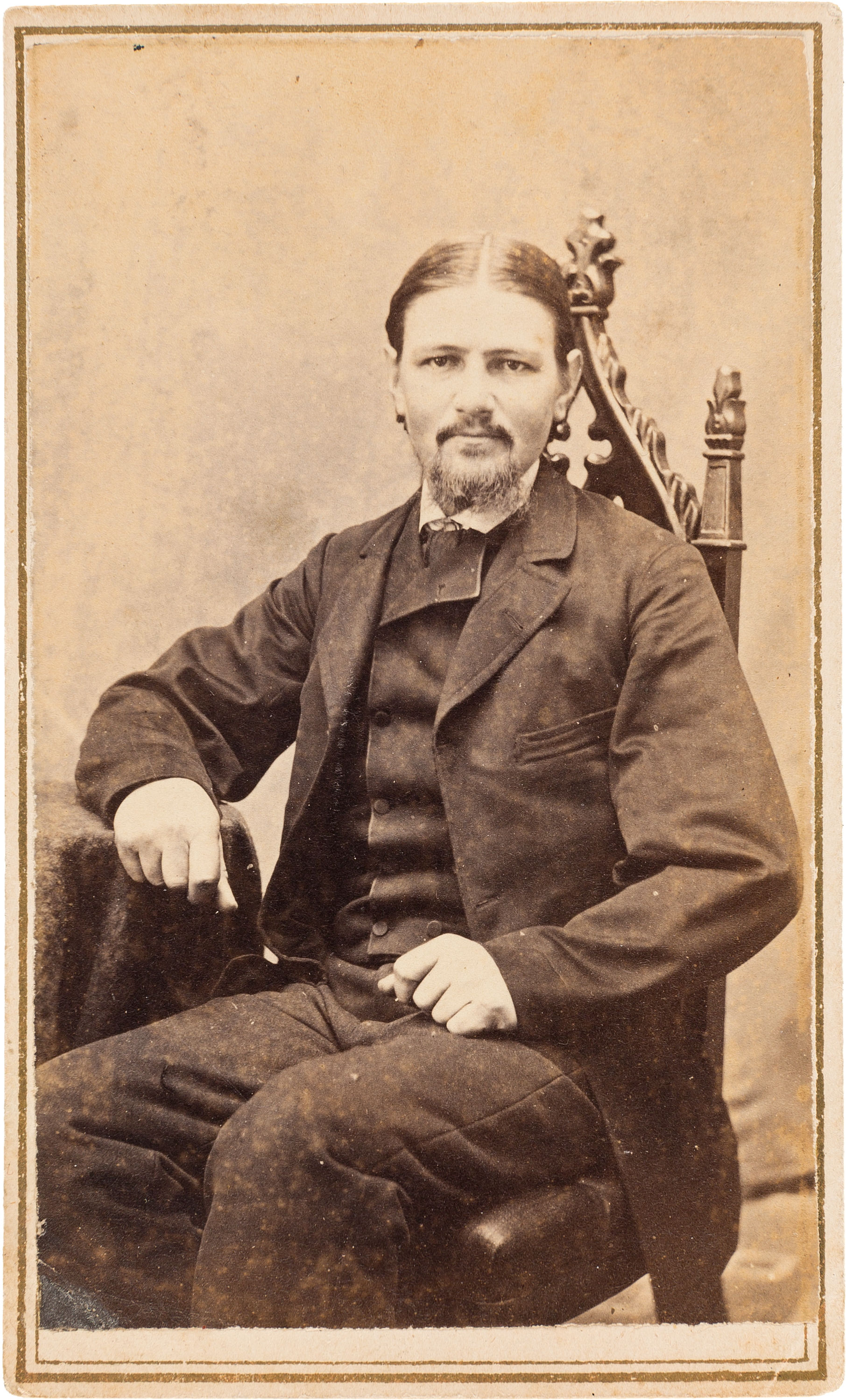
The immediate aftermath of the shot revealed the confusion that official narratives would later suppress. Several soldiers reported hearing Corbett fire; others, positioned on the opposite side of the barn, heard only the continued roar of the fire and the shouts of their comrades. Lieutenant Doherty, rushing to the spot, found Corbett still in position, pistol in hand, announcing that he had shot Booth and that God had directed him. The religious declaration, offered unprompted, established a framework for understanding the act that would prove useful to officials seeking to avoid questions of military discipline.
The bodies accumulated according to their institutional fate: Lincoln in his tomb at Springfield, consecrated and visited; Booth in an unmarked grave whose location was concealed even from his family, his remains eventually moved and reburied in secret; the convicted conspirators in the Arsenal penitentiary yard, buried together in shallow graves until their remains were claimed or relocated. The official narrative accumulated with them, each document smoothing the rough edges of the actual pursuit, each report making the conclusion seem more inevitable and more just than the chaotic, smoke-filled minutes at the Garrett farm had been.
What remained was the physical fact of Booth’s body on the porch, alive but dying, surrounded by soldiers who had achieved their objective without having received clear instructions about what to do with it once found. The manhunt was over. The body must now be secured and identified.