Chapter 17
The Diary in the Judge Advocate’s Desk
Seen from above, the whole map of it—the fire and gunshot on a Virginia farm that ended the manhunt, the controlled environment of the Montauk’s deck where the reckoning began, the silent storage of the corpse waiting for the trial that would legitimate everything that had been done—resolves into a single route up the Potomac. For before the corpse reached Washington, before the surgeons measured the skull and removed the vertebrae, another form of remains had already begun that journey: a small red leather book that held what Booth himself had thought worth recording.
Back in April, before the War Department had finished counting the reward money, that book was still whole. Small enough to ride inside a coat pocket against the body, it was bound in red leather that had darkened with sweat and rain during twelve days of flight. John Wilkes Booth had carried it across the Navy Yard Bridge, past the Surratt tavern, through the pine thicket with Thomas Jones, and into the tobacco barn where Boston Corbett’s bullet found him. The pages inside held his own account of the assassination and the broken left fibula he suffered jumping from the presidential box at Ford’s Theater. When investigators pulled it from his corpse at the Garrett farm on April 26, the diary was intact, a continuous record of the fugitive’s mind.
Three weeks later, the same book sat inside Judge Advocate General Joseph Holt’s desk in Washington. Eighteen pages had been excised with a blade, leaving stubs where Booth’s handwriting had been. The mutilation was deliberate, authorized at the highest levels of the War Department, and it transformed the diary from a historical document into a curated weapon for the prosecution.
The seizure occurred in the gray hours of April 26, after the tobacco barn had burned and Booth had been dragged to the porch of the Garrett farmhouse. Everton Conger, the intelligence officer who had led the cavalry detachment, directed the search of the body. The corpse lay on a mattress, stripped of its weapons and maps. Inside the coat pocket, Conger or one of Lafayette Baker’s detectives found the diary. A pocket memorandum book, approximately four by six inches, with a red leather cover that had gone soft from moisture and handling. The investigators flipped through it on the spot, recognizing immediately that they had captured something more valuable than the derringer or the compass. Here was Booth’s own voice, unmediated, covering the days between the shooting and the capture.
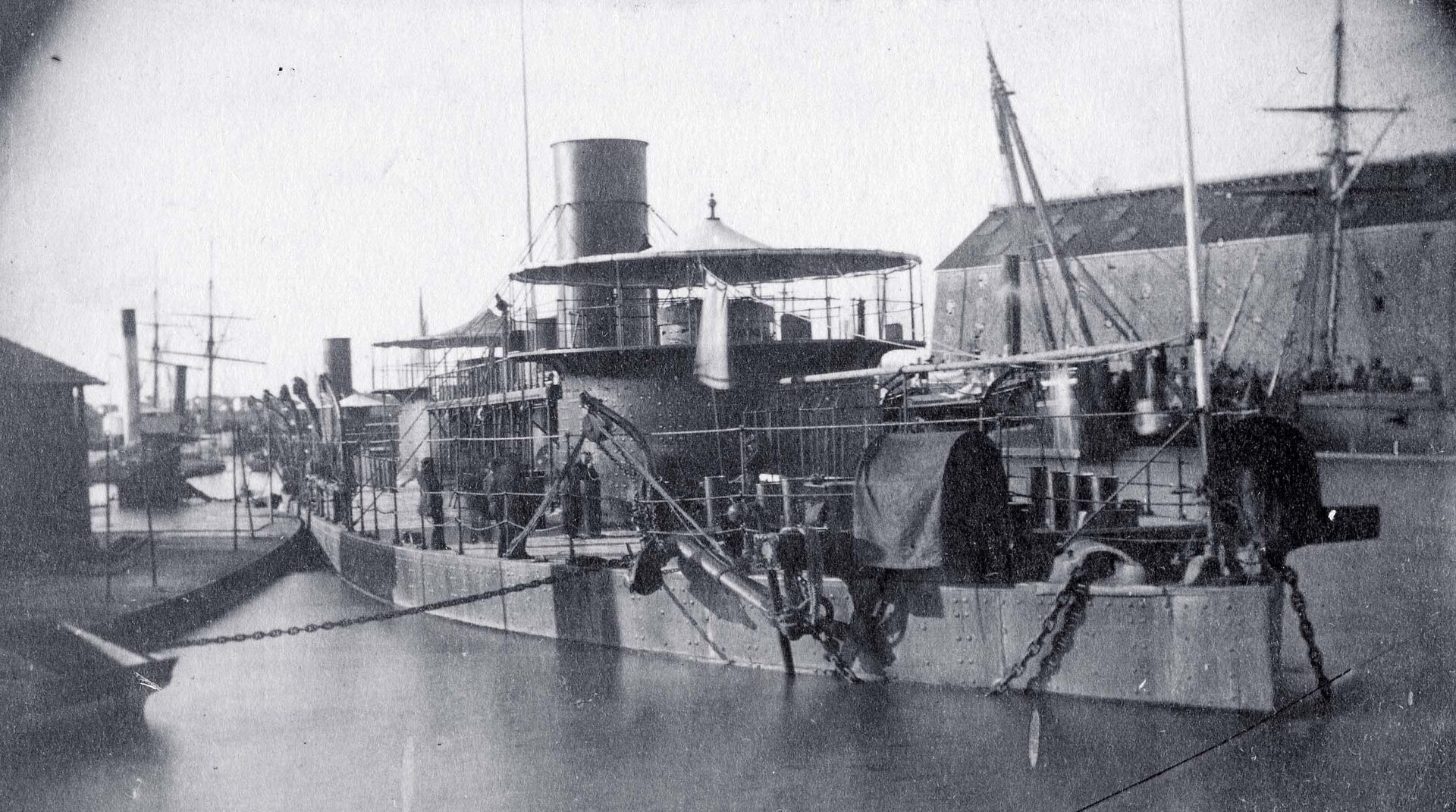
Within hours, the book was on its way to Washington aboard the John S. Ide, the same vessel transporting the body to the capital. The diary arrived at the Navy Yard on April 27, along with the corpse that would be examined aboard the monitor Montauk. Secretary of War Edwin Stanton and Judge Advocate General Joseph Holt examined it in the ship’s cabin. They read Booth’s description of the night of April 14, his account of breaking his left fibula when he jumped from the presidential box while fleeing Ford’s Theater, and his complaints about the pain that David Herold had helped him manage during the ride to Dr. Samuel Mudd’s house. The entries covered the flight through Maryland, the wait in the pine thicket, and the crossing of the Potomac. The handwriting grew shakier as the days progressed, reflecting the deteriorating physical condition of a man riding with a shattered leg.
David Edgar Herold, born June 16, 1842, and destined to hang on July 7, 1865, had accompanied Booth to Mudd’s home after the assassination. The diary confirmed their movements together, establishing the link between the assassin and the young pharmacist’s assistant who had guided him through unfamiliar country. This connection was crucial for the prosecution, which needed to prove a conspiracy rather than a solitary act.
But the diary contained more than logistical details. Booth had used the pages to justify his actions, framing the murder of Lincoln as a necessary blow against tyranny. He wrote of his love for the South, his hatred of abolition, and his belief that he had struck a blow for liberty. These political declarations posed a problem for Holt and Stanton as they prepared the case for the military tribunal. The prosecution’s strategy depended on portraying Booth and his associates as common criminals and traitors, not as political actors with coherent motives that might resonate with Confederate sympathizers. Moreover, the later entries threatened to implicate individuals whose names had not yet appeared in the investigation—potential accomplices who had sheltered the fugitives or provided intelligence during the twelve-day flight.
Sometime between the diary’s arrival in Washington and the convening of the military commission on May 1, eighteen pages were removed. The excision was surgical. Someone—likely Holt himself, acting with Stanton’s knowledge—used a sharp blade to cut the threads binding the central gatherings of the book. The pages were removed entirely, leaving no fragments behind, only rough paper stubs protruding from the spine. The remaining pages were left undisturbed, preserving entries about leg injury and early flight while eliminating whatever Booth wrote in his final week.
The reasons for this mutilation have been obscured by the subsequent history of the trial. Holt maintained possession of the diary throughout the proceedings, producing it as evidence but never explaining the missing pages to the tribunal. Congressman John A. Bingham and Major Henry Lawrence Burnett, assisting the prosecution, referenced the diary in their arguments but avoided reading from the excised sections. The defense attorneys, including Frederick Stone representing Dr. Mudd, objected to the use of an incomplete document, but the military commission overruled them. The tribunal was composed of officers appointed by President Andrew Johnson under the authority granted during wartime; they were not bound by the evidentiary rules of civilian courts.
The missing pages likely contained names. During the manhunt, Baker’s agents had arrested four suspects within two days of his arrival in Washington, and they possessed the names of at least two more conspirators. The diary may have confirmed these identities or revealed additional contacts within the Confederate underground that had sustained Booth in Maryland and Virginia. Thomas Jones, the Confederate agent who had guided Booth and Herold through the pine thicket and arranged their crossing of the Potomac, was not arrested until later; his name might have appeared in the excised portion. More dangerously for the prosecution’s narrative, the pages may have contained Booth’s assessment of his own status as a prisoner of war rather than a criminal, a claim that could complicate the military tribunal’s jurisdiction.
The physical act of cutting pages represented a broader transformation in how state handled evidence during reckoning. Manhunt operated on logic of military necessity: capture Booth by any means necessary, including extrajudicial killing ordered by Stanton and executed by Corbett. Trial required different logic: legal legitimacy. Holt needed to construct record that would withstand scrutiny not only from tribunal but from nation eventually returning to peacetime law. Diary as it existed in Booth’s pocket was too messy, too suggestive of political motive and possible entrapment by Confederate networks. Diary as it existed in Holt’s desk was managed artifact: stripped of ambiguity, reduced to tool for securing convictions.
This curatorial violence paralleled handling of Booth’s body. Just as surgeons removed vertebrae from corpse for preservation and study, Holt removed pages from diary for control and suppression. Both acts served same institutional purpose: transform chaotic violent event into documented contained narrative War Department could administer. Body photographed measured buried in secret; diary exhibited in fragments; absences as significant as contents.
The eighteen missing pages created an enduring lacuna in the historical record. Historians have speculated that they contained references to Edwin Stanton himself, suggesting that the Secretary of War removed them to protect his own reputation or conceal prior knowledge of the assassination plot. Edward Steers Jr. Has demonstrated that these theories rely on non-reputable sources and speculation unsupported by the documentary evidence. What is certain is that the pages were removed by the prosecution team, not by Booth, and that their removal served the legal strategy of the military tribunal.
Handling of diary illuminates broader evidentiary scramble characterizing post-capture period. Stanton’s War Department faced dual challenge: demonstrate justice being done; ensure doing justice did not expose uncomfortable truths about federal intelligence failures; Confederate networks persisting into April 1865; extrajudicial elements Booth’s death. Military tribunal offered solution to both problems: procedures controlled more tightly than civilian court; composition guaranteed sympathetic verdicts; records shaped before becoming public. Diary mutilation not aberration but logical extension system: preemptive editing history to match prosecution needs.
As the trial progressed through May and June, the compromised diary sat in Holt’s desk, occasionally produced for the commissioners to inspect but never restored to its original state. The prosecution built its case on the remaining entries, which established Booth’s movements and his association with Herold, Mary Surratt, and Dr. Mudd. The defense attorneys argued that the missing pages might have exonerated their clients, but they could not prove what they had never seen. The tribunal convicted all eight defendants and sentenced four to hang, including Mary Surratt, the first woman executed by the federal government.
The journey of the diary from the Garrett farm to Holt’s desk unfolded against a backdrop of mounting institutional pressure that shaped every decision about its handling. Stanton’s War Department, within forty-eight hours of Booth’s death, faced a cascade of competing demands: the need to identify and arrest remaining conspirators, the imperative to reassure a traumatized public that justice would be swift, and the political necessity of demonstrating that the assassination had been the work of a detectable conspiracy rather than an irreducible act of individual malice or, worse, a symptom of systemic failure in federal security.
The diary arrived in Washington at precisely the moment when these pressures converged, making its contents simultaneously invaluable and dangerous. Every entry Booth had written existed in a zone of interpretive instability—what justified his actions to himself might, in different hands, justify them to others, or might implicate networks that the War Department had proven unable to penetrate or dismantle.
The initial examination of the diary aboard the Montauk occurred in circumstances that precluded careful deliberation. Stanton and Holt reviewed the book in the same cabin where surgeons were preparing to autopsy Booth’s body, surrounded by the physical evidence of manhunt violence. The Secretary of War, who had not slept more than a few hours since April 14, operated under the accumulated strain of managing a national emergency while concealing his own physical decline. Holt, for his part, had spent the preceding weeks constructing the legal framework for military commissions, drawing on his experience as Judge Advocate General to anticipate evidentiary challenges before they materialized.
Neither man was disposed to treat Booth’s words as historical raw material demanding preservation; both understood the diary as a resource to be deployed or neutralized according to strategic calculation. The atmosphere of the cabin—mingling the odors of formaldehyde and river damp, illuminated by lanterns that cast unstable shadows—encouraged decisive action over archival caution.
The decision to excise pages rather than sequester the entire diary reflected a specific legal calculation about the military tribunal’s procedures. Unlike civilian courts, where suppression of evidence might trigger defense motions or appellate review, the commission operated under regulations that Holt himself had helped draft. The 1862 Articles of War and Lincoln’s subsequent suspension of habeas corpus had created a jurisdiction where evidentiary standards remained undefined, subject to the commission’s own determinations. Holt understood that producing a complete diary would invite defense scrutiny of every passage, potentially opening lines of inquiry that the prosecution could not control. By removing the pages entirely—rather than, say, marking them as classified or restricting access—he eliminated the possibility of accidental disclosure or judicial order for their production. The physical destruction ensured that no subsequent authority, whether President Johnson or a future Congress, could compel their examination.
What the excised pages likely contained can be reconstructed, in part, from the patterns of Booth’s surviving entries and the prosecution’s subsequent behavior. The intact portions of the diary show Booth increasingly preoccupied with his own martyrdom and the theatricality of his situation, writing himself as the protagonist of a tragedy he had authored. It is reasonable to infer that the missing entries, covering the final week of his life, extended this self-dramatization into specific encounters with Confederate agents and sympathizers who provided material assistance.
Booth had reached the Garrett farm because someone had directed him there; the diary almost certainly recorded these directions and the names attached to them. The prosecution’s failure to pursue certain leads—its relative inattention to the Confederate signal service that had operated across the Potomac, its curious leniency toward some Maryland residents who had clearly assisted the fugitives—suggests that the missing pages named individuals whose exposure would have complicated the War Department’s preferred narrative of a contained, defeated conspiracy.
The timing of the excision mattered as much as its content. Between April 27 and May 1, Holt and Stanton moved rapidly to establish the parameters of the forthcoming trial. They selected commission members, approved charges, and determined which defendants would be joined in a single proceeding. The diary’s mutilation occurred during this preparatory phase, before defense attorneys had been appointed or had opportunity to demand discovery. This sequencing was crucial: once the trial began, any alteration of evidence would constitute a more detectable offense against procedural regularity. By acting preemptively, Holt ensured that the defense’s objections would arrive too late to prevent the diary’s admission, and could be dismissed as speculative complaints about unseen material. The military commission’s first session on May 1 thus opened with the evidentiary battlefield already prepared, its most volatile terrain removed from contestation.
The physical characteristics of the excision itself deserve attention, for they reveal the care with which this destruction was accomplished. The pages were not torn but cut, using a sharp blade applied to the thread bindings rather than the paper. This technique preserved the structural integrity of the remaining gatherings, allowing the diary to be handled and displayed without obvious signs of violence. The stubs left behind were short, perhaps a quarter-inch, insufficient to suggest by their texture or ink traces what had been removed. Someone familiar with bookbinding—possibly Holt, who had handled legal documents throughout his career, or a War Department clerk assigned to the task—executed the work with precision that belied its destructive purpose. The result was an artifact that appeared complete at casual inspection, its mutilation discoverable only through systematic comparison of page numbers or examination of the spine.
This curatorial attention extended to the diary’s subsequent custody. Holt retained personal possession of the book throughout the trial, resisting requests from commission members to enter it formally into the court’s records. He produced it for inspection when necessary, guided attention to specific passages, and returned it to his desk. This handling prevented the kind of independent examination that might have revealed discrepancies between the physical evidence and the prosecution’s characterizations of it. The diary became, in effect, a prop in Holt’s performance of prosecutorial authority, its presence more important than its content. When Bingham or Burnett referenced it in argument, they did so through Holt’s mediation, quoting selectively from passages he had approved for disclosure.
The defense attorneys, operating under severe constraints of time and access, could do little to challenge this arrangement. Frederick Stone, representing Dr. Mudd, raised the most sustained objections, noting that the diary’s provenance and completeness had not been established to civilian standards of evidence. But the military commission’s rules placed the burden of proof differently, and Stone’s objections were overruled without recorded reasoning. The other defense attorneys, appointed just days before the trial’s commencement, lacked the resources to investigate the diary’s handling independently. They could speculate about what the missing pages contained—suggestions of Mudd’s innocence, evidence of other conspirators unknown to their clients—but speculation carried no weight against the physical presence of the book in Holt’s hand.
The diary’s transformation during these weeks paralleled broader changes in how the War Department managed information about the assassination.
The diary remained in War Department files after the executions, its red leather cover growing stiffer as it aged. Reward claimants began pressing their cases even before the trial ended, demanding shares of the $100, 000 bounty posted for Booth’s capture. The informants who had guided Conger to the Garrett farm, the detectives who had followed Baker’s orders, and the soldiers who had surrounded the barn all filed petitions. They argued over who had earned the money, who had fired the shot, and who had possessed the information that led to the capture. The diary, now a mutilated exhibit, sat in Holt’s desk as these claims accumulated, its missing pages a silent testament to the distance between the event itself and the record the state had constructed to contain it.
The transformation of Booth’s diary from personal testament to prosecutorial tool reveals how institutions reshape evidence to fit institutional needs. The War Department that had failed to prevent Lincoln’s assassination now sought to control every aspect of its aftermath. The man who had written himself into history as an actor playing a role became, in death, a character in a script written by his enemies. His own words survived only in fragments, selected and censored to serve verdicts he would have rejected. The red leather book in Holt’s desk—eighteen pages lighter than when it left Booth’s pocket—stood as proof that the pursuit of legal victory could compromise the pursuit of historical truth, and that the state’s power to punish extended naturally into a power to edit.