World History · English
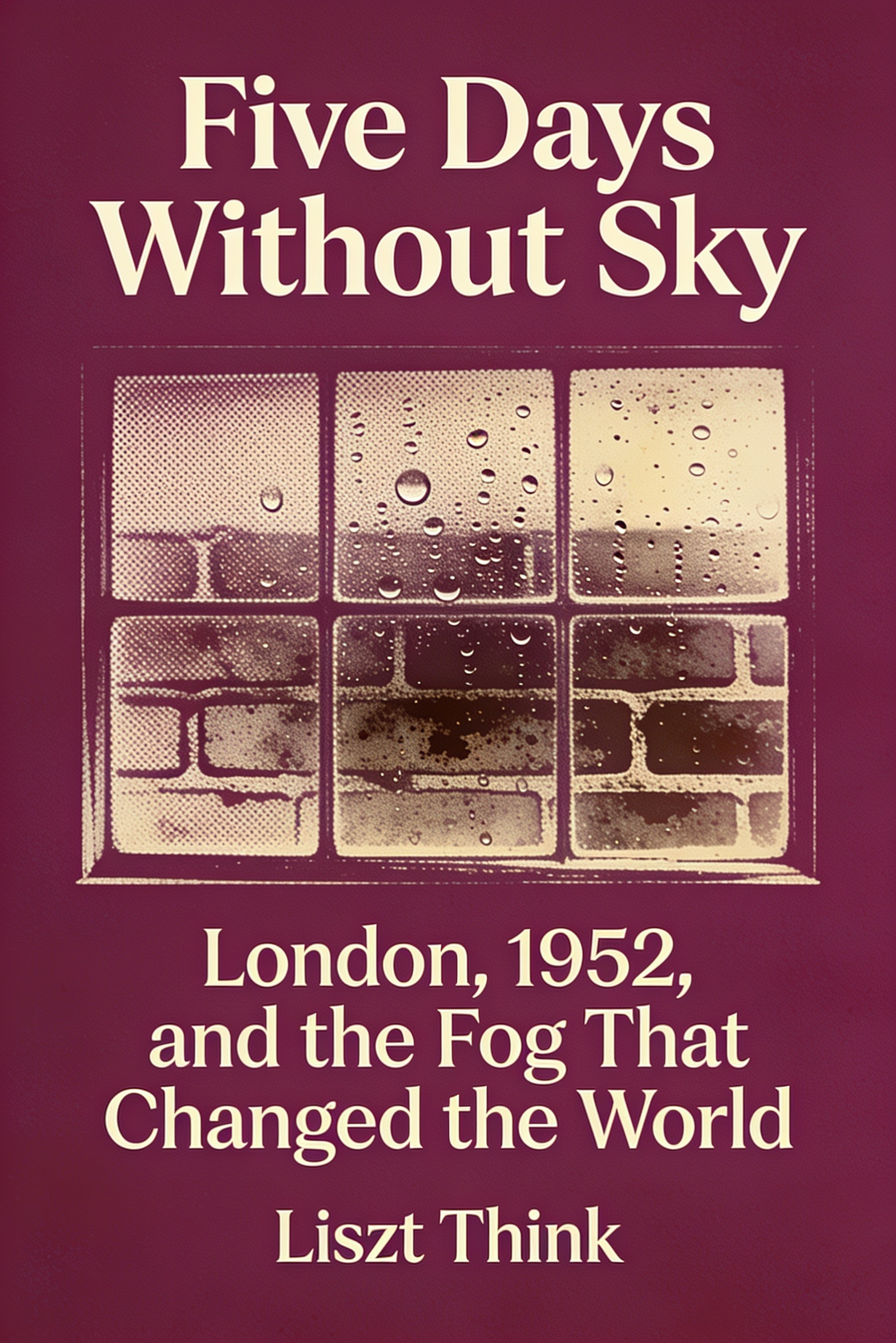
Five Days Without Sky
London, 1952, and the Fog That Changed the World
About this book
On December 5, 1952, an anticyclone trapped the smoke of a million coal fires over London. For five days, visibility fell to mere feet. Buses were guided by conductors wielding flares; prize cattle at the Smithfield Show choked to death; hospitals and undertakers exhausted their supplies. While the Ministry of Health initially reported four thousand deaths, the true toll reached twelve thousand. Drawing on Met Office records, government papers, and survivor memories, this narrative reconstructs the catastrophe hour by hour. It exposes a government reluctant to blame the low-grade ‘nutty slack’ coal it profited from, even as Parliament debated in blindness and coffin makers worked overtime. From the silence of operating theatres to the eventual Clean Air Act of 1956, this is the definitive account of a city suffocating under its own fuel—and the painful reckoning that finally cleared the air.
AI editorial review
The book excels in its immersive, detail-driven reconstruction of the Great Smog, rendering causation through concrete administrative and physical specifics rather than assertion. Its multi-track structure maintains distinct voices, and the immediacy achieved through dated physical details—like a bus conductor extinguishing his flare—is masterful. However, a jarring structural seam between two key chapters disrupts the narrative's core chronological contract, momentarily breaking the immersive countdown that otherwise drives the story with such discipline.