World History · English
The Impossible Light
Gallium Nitride, Corporate Betrayal, and the Invention of Blue Light
About this book
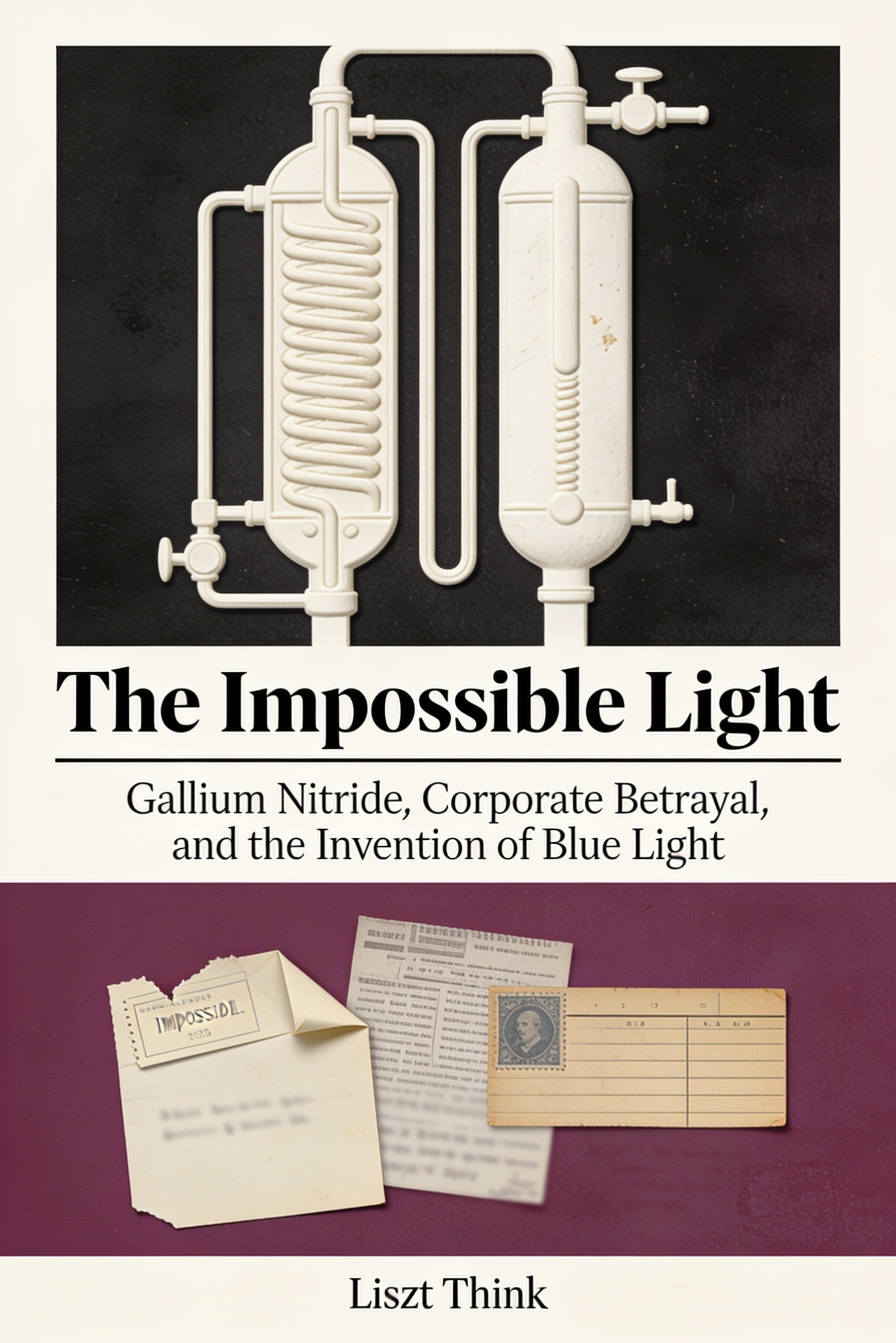
For decades, the electronics industry deemed a bright blue LED physically impossible. While major laboratories abandoned gallium nitride as a dead end, an obscure chemical company in Tokushima funded one engineer’s obsession. Shuji Nakamura built a two-flow reactor by hand, enduring hundreds of failed crystal growths to achieve the breakthrough that unlocked white light. Yet scientific triumph collided with corporate reality. Drawing on laboratory notebooks, patent filings, and court records, this narrative reconstructs the parallel discoveries in Nagoya and the bitter 2001 lawsuit where Nakamura sued his own employer for recognition and compensation. From the home-built machinery to the Nobel committee’s closed deliberations, the story traces how a single color reshaped global illumination and redefined the value of invention. It is a chronicle of persistence against consensus, documenting the precise moment science became commerce and the uneasy price paid by those who lit the modern world.
AI editorial review
This corporate history excels by weaponizing financial data as narrative conflict, particularly in its stark juxtaposition of a ¥20,000 bonus against billions in industry revenue—a powerful, concrete critique of R&D valuation. Its strength lies in grounding the 'impossible innovation' story in rigorous causal chains tied to specific organizational structures and Japanese law. However, the prose sometimes falters, with rhythmic stutters from excessive punctuation and occasional meta-narrative intrusions that break the immersive journalistic spell. A final polish to smooth these mechanical artif