World History · English
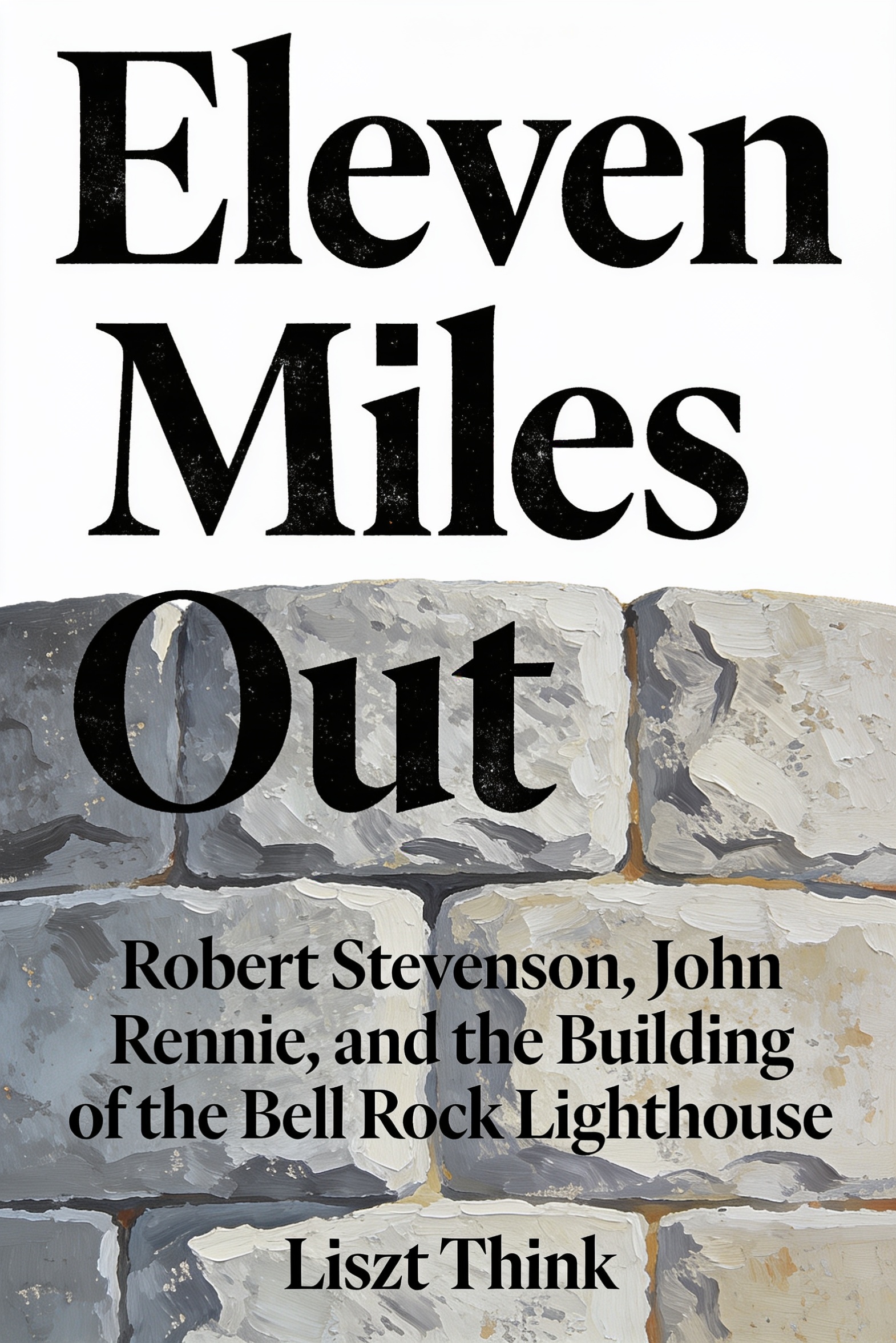
Eleven Miles Out
Robert Stevenson, John Rennie, and the Building of the Bell Rock Lighthouse
About this book
Eleven miles off the Scottish coast, a reef lies submerged for twenty hours a day. In the early nineteenth century, raising a granite tower on this treacherous foundation seemed impossible. Robert Stevenson had only brief summer tides to set interlocking stones cut without mortar in an Arbroath workyard. His men lived first on a moored ship, then in a precarious wooden beacon perched above the waves. When storms broke their boats loose in September 1807, thirty-two workers faced disaster on the exposed rock. Drawing on Stevenson’s 1824 narrative, Board minutes, and workmen’s records, this history reconstructs four grueling seasons of construction culminating in the lamp’s lighting in 1811. Beyond the engineering feat lies a bitter contest over credit between Stevenson and consulting engineer John Rennie, preserved here in their own correspondence. A story of human endurance against the North Sea, where precision masonry met professional rivalry to create a landmark that still stands.
AI editorial review
This is a biography that treats engineering as institutional politics with remarkable analytical rigor. Its central argument—that professional authority is constructed through narrative control as much as technical genius—is sustained with formidable documentary evidence, particularly in its precise anatomy of the Stevenson-Rennie credit dispute. The human cost of power is embedded in operational detail, never sentimentalized. However, the reading experience is occasionally disrupted by unmarked chronological jumps between chapters and by prose artifacts—verbatim repeats and a high density of